AI citation checks for legal briefs, against the cases and statutes they cite
Check that every authority in a draft says what the brief says it says, with the passage behind each finding.
In short
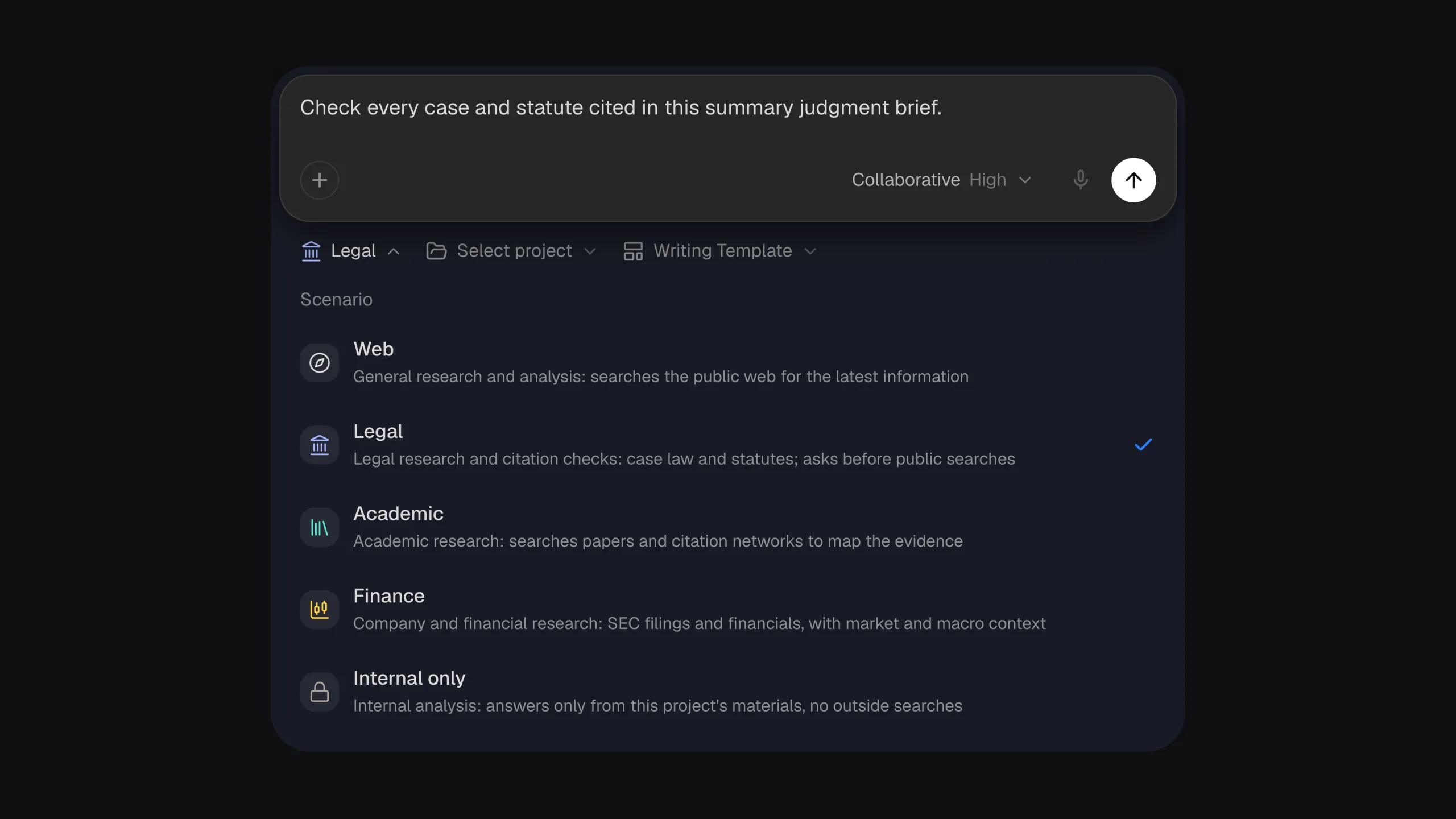
The Legal scenario turns Citaria into a citation checker for US legal writing. It reads each case and statute a brief cites, checks the proposition, pin cite, and quotation against the source text, and marks each checked sentence OK, FIX, or NOTE with the passage it relied on. Legal judgment stays with the attorney.
- Turn it on
- Choose Legal in the Scenario menu next to the message box
- Case law
- US court opinions from CourtListener
- Statutes
- US Code, CFR, state codes, constitutions, and court rules
- Jurisdiction
- US law; California practice by default when none is given
- Findings
- OK, FIX, or NOTE for each checked sentence, with the source passage
- Not included
- Citator status: whether a case is still good law
How does the Legal scenario check a brief?
Choose Legal and add the brief
Choose Legal in the Scenario menu, then upload the brief or paste the passage you want checked. Citaria lists every case and statute it cites.
Files and web sources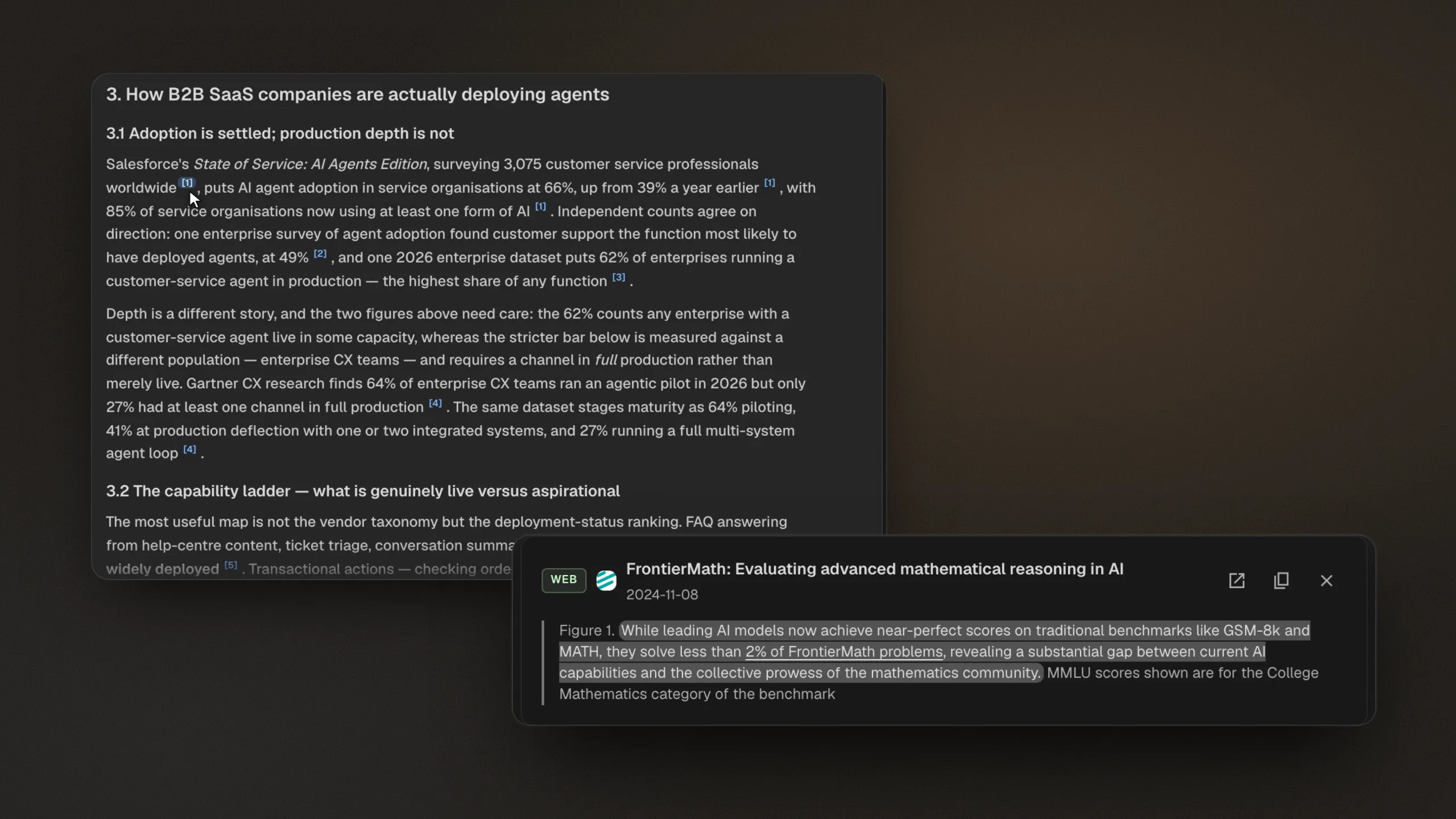
Agree on what to check
Before checking, Citaria asks in one go what to check and which sources it may use. If your request already settles these, it starts checking right away.
Research outline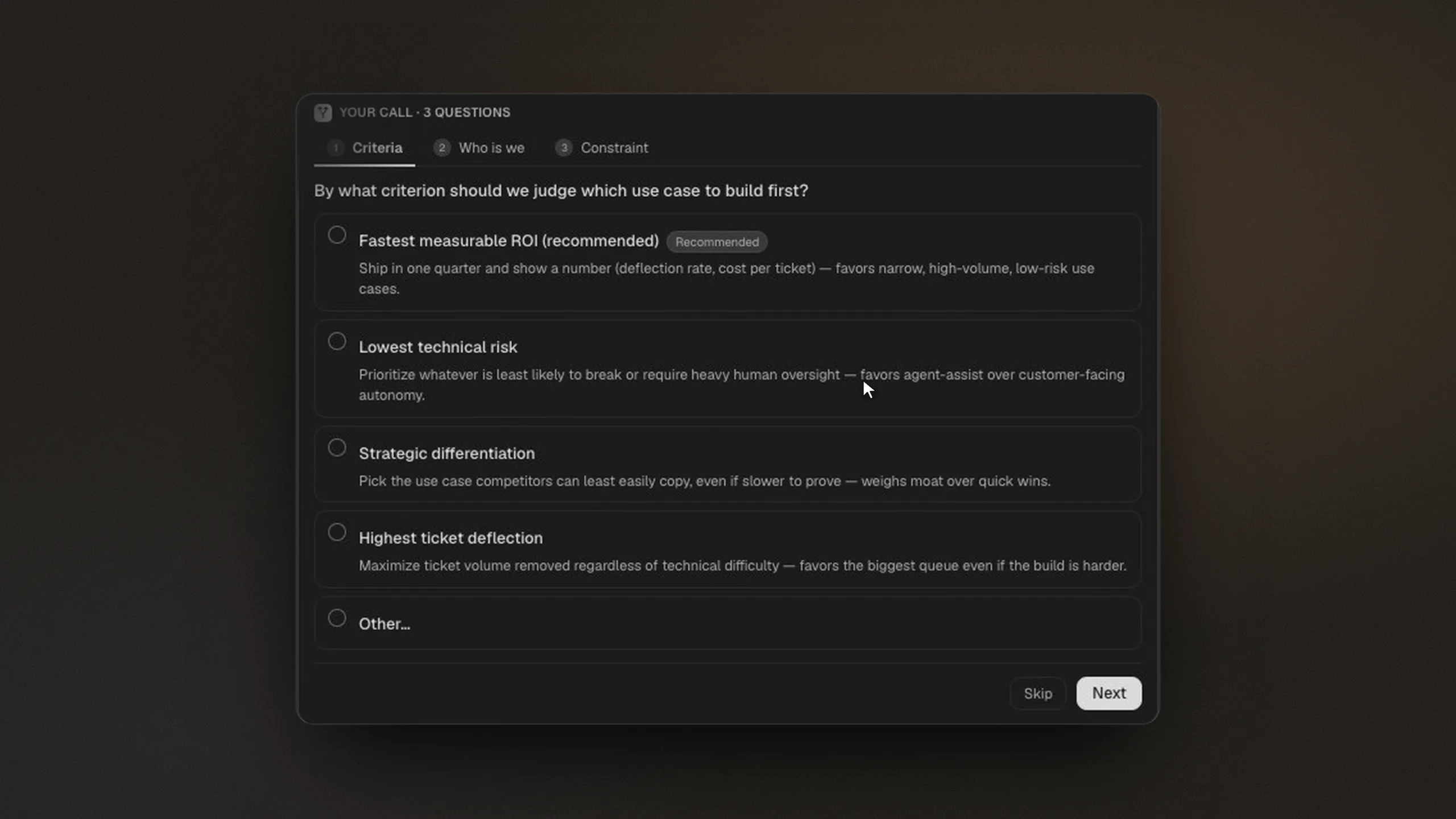
Checked sentence by sentence against the source
Citaria reads each opinion or statute and checks the proposition, the pin cite, and any quotation, marking each checked sentence OK, FIX, or NOTE with the passage it relied on.
Passage-level citations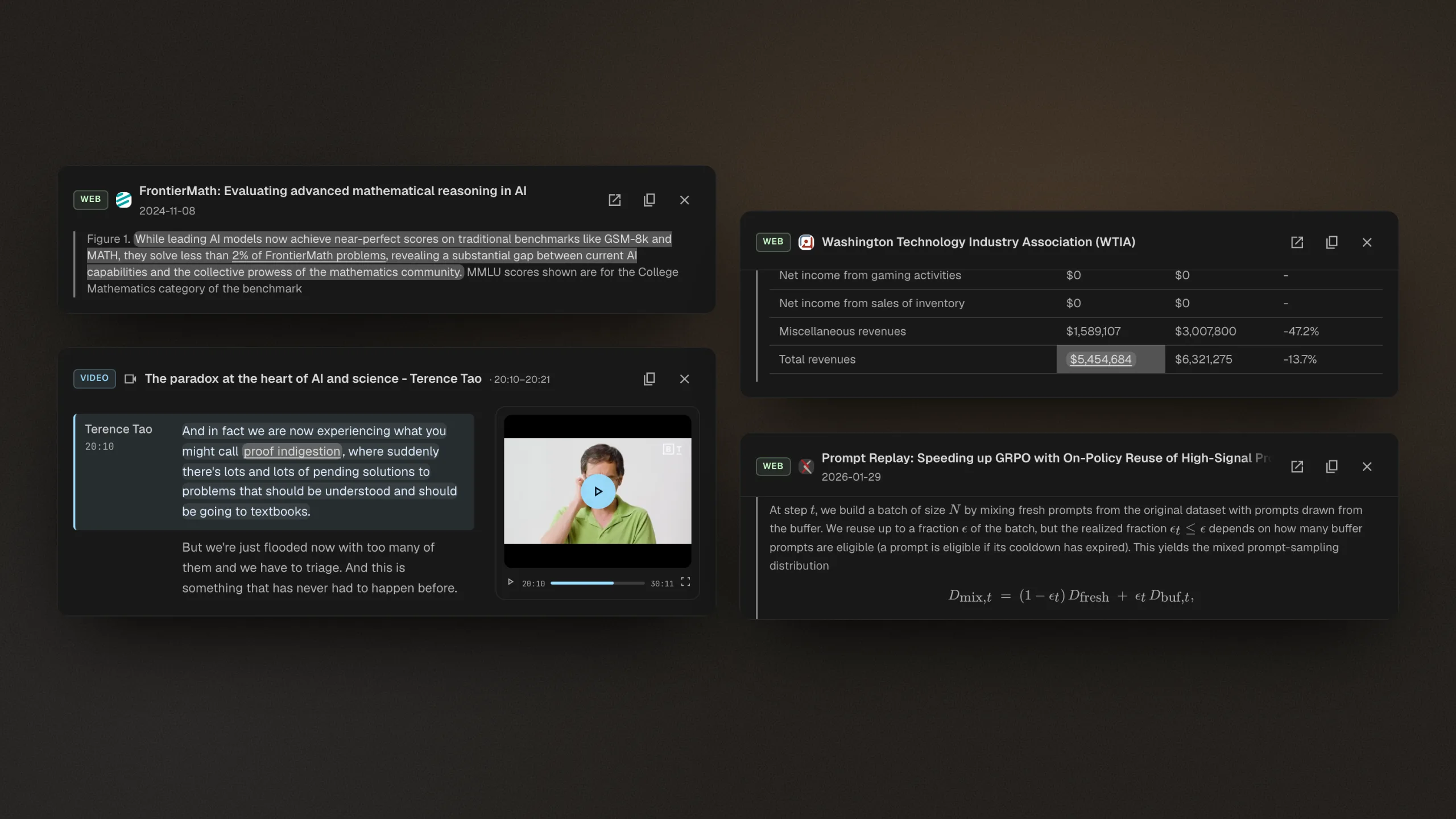
Audited once it is written
A separate audit pass rates the finished check and lists the issues. Citaria suggests fixes but does not change your brief unless you ask.
Independent audit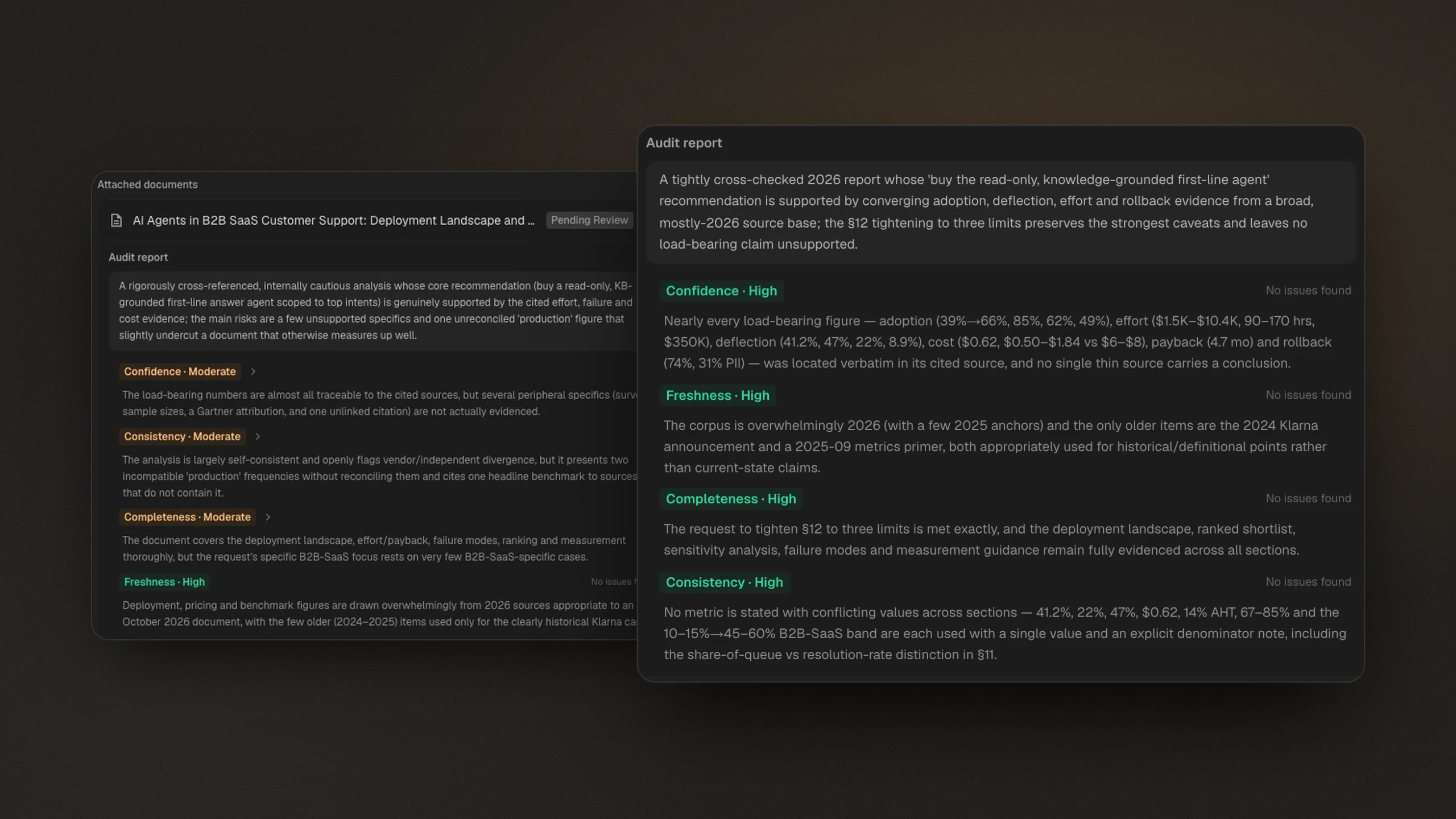
Is the Legal scenario right for your work?
Best for
- Checking that each cited case and statute supports the proposition it is cited for
- Catching wrong pin cites, misquotations, and citations that do not support the sentence
- Looking up US case law and statutes for direct questions, citing what was read
Not for
- Legal strategy: every legal judgment stays with the attorney
- Whether a case is still good law: there is no citator
- Non-US law, court dockets, or secondary sources
What should you look for in an AI citation checker?
| Criterion | Why it matters | What good looks like | How Citaria does it |
|---|---|---|---|
| Reads the authority itself | A summary is not the holding | Each finding cites the opinion or statute text | Checks against the opinion or statute text and shows the passage |
| Checks more than existence | A real case can still be cited for the wrong point | Proposition, pin cite, and quotation all checked | Checks proposition, pin cite, and quotation for each citation |
| Says what it could not check | Silent gaps are worse than flagged ones | Unconfirmed items listed | Lists pin cites it could not confirm; states that subsequent history was not checked |
| Leaves the filing to you | The attorney signs the brief | Suggestions, not edits | Suggests fixes and does not change your document unless you ask |
What the Legal scenario does not do
- US law only, with California practice assumed when no jurisdiction is given; case law covers court opinions only, with no dockets or secondary sources.
- There is no citator: Citaria does not tell you whether a case is still good law.
- Pin cites are confirmed only where the opinion text carries official page markers.
- Long briefs are checked in passes of about 8–10 authorities per run; ask Citaria to continue for the next pass.
- Not legal advice: the attorney decides what to file.
Can AI check the citations in a legal brief?
Yes, as a first pass. In the Legal scenario, Citaria reads each cited case and statute and checks the proposition, pin cite, and quotation, marking each checked sentence OK, FIX, or NOTE with the passage it relied on. The attorney decides what to change.
Does Citaria tell me whether a case is still good law?
No. Citaria has no citator, so it does not run a check for negative treatment or subsequent history. Each finding in its report notes that subsequent history was not checked, so you know to run that check separately.
Which legal sources does the Legal scenario use?
US court opinions from CourtListener, and federal and state statutes, regulations, constitutions, and court rules. Web searches need your go-ahead and are limited to government sites and primary legal publishers.