Citaria vs Consensus
From what the papers say to a report built on every source you have
Consensus is an AI academic search engine that answers questions from peer-reviewed papers and shows where the research leans. Citaria is built for research reports that go beyond papers: Citaria researches the open web and recordings alongside your files, asks what you mean before it starts, and audits each finished report with a separate evaluator model.
Should you use Consensus or Citaria?
Choose Consensus when you need
- A quick read on where scientific research leans, with the Consensus Meter
- Filtering studies by journal rank, study design, or sample size
- Literature reviews grounded in peer-reviewed papers
Choose Citaria when you need
- Questions that need the open web and recordings, not only papers
- An independent audit of the finished report
- A report you keep refining with every AI edit marked for review
What can Citaria do that Consensus doesn’t?
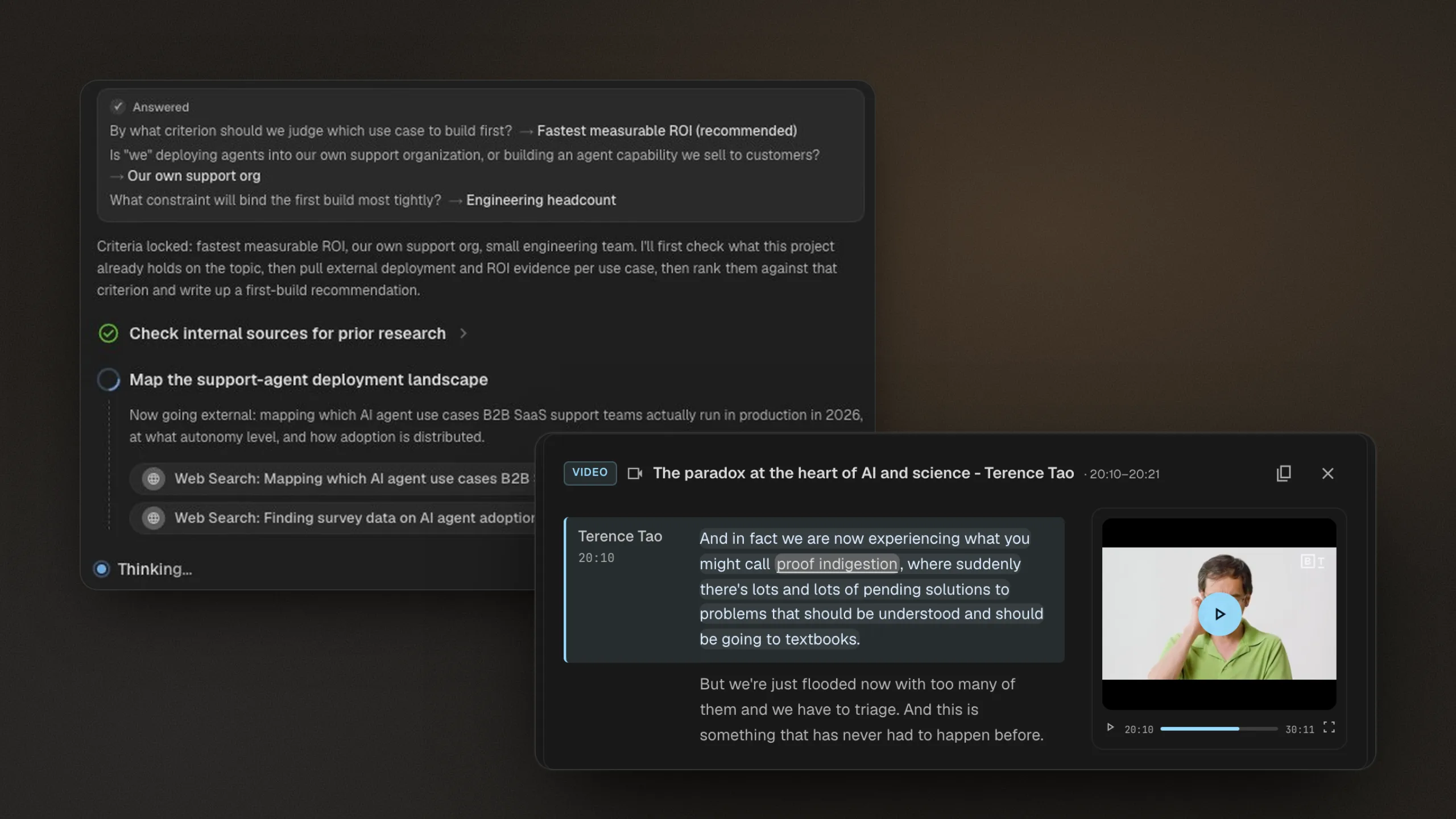
Goes beyond papers to the web and recordings
Many questions need more than published papers: market news, competitor pages, interview recordings. Citaria researches the open web alongside your project files, and cites audio and video at the moment a statement was made.
Consensus searches peer-reviewed papers and the PDFs you upload; its documentation does not describe searching the open web or working with audio or video.
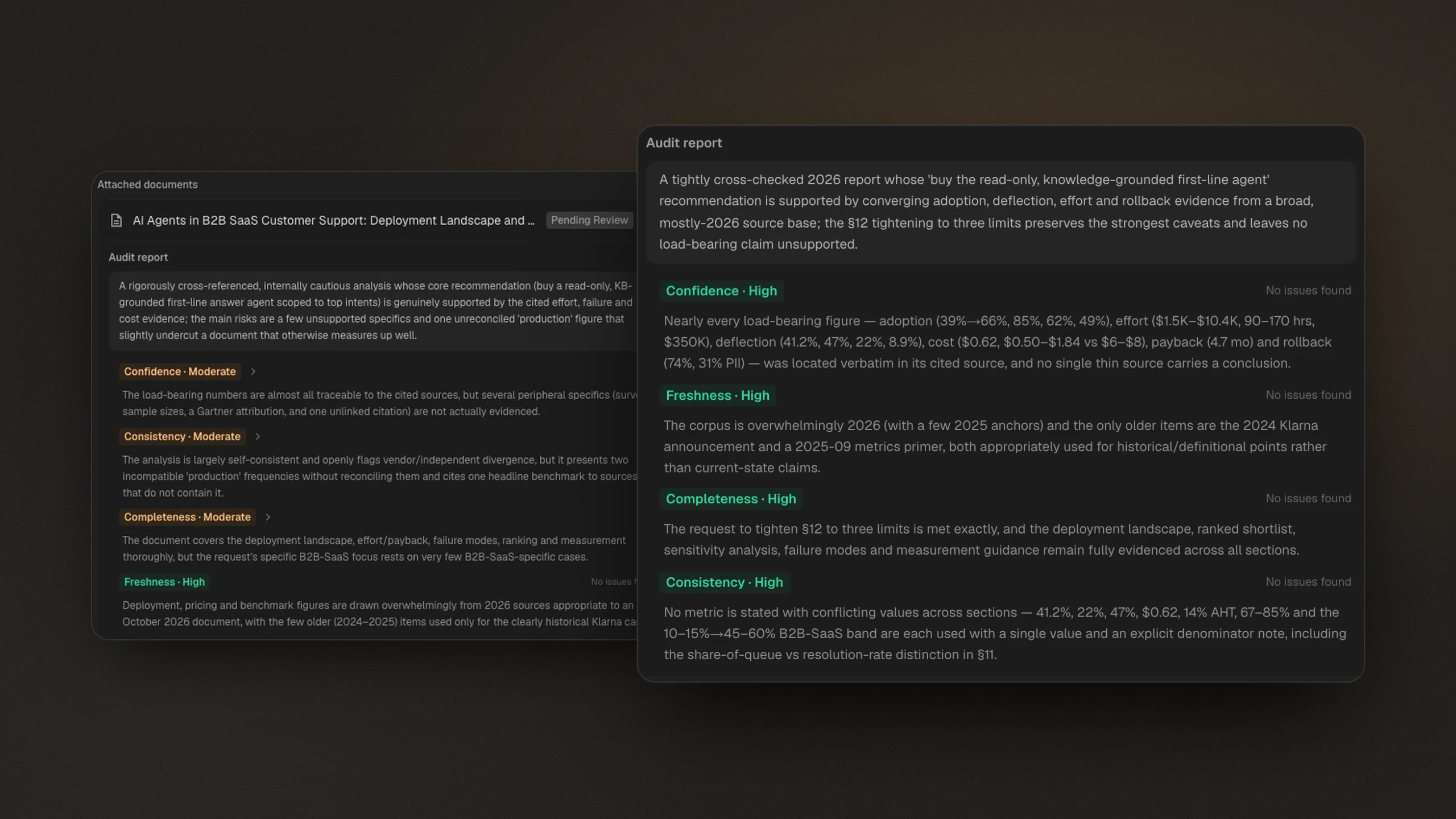
Audits the finished report, not just the papers
Filtering sources cannot tell you whether the finished synthesis is right. Before you read a Citaria report, a separate evaluator model grades it for confidence, consistency, completeness, and freshness, then Citaria revises what the audit flags.
Consensus uses separate models to check each paper's relevance before synthesis and excludes retracted papers; its documentation does not describe auditing the finished report.
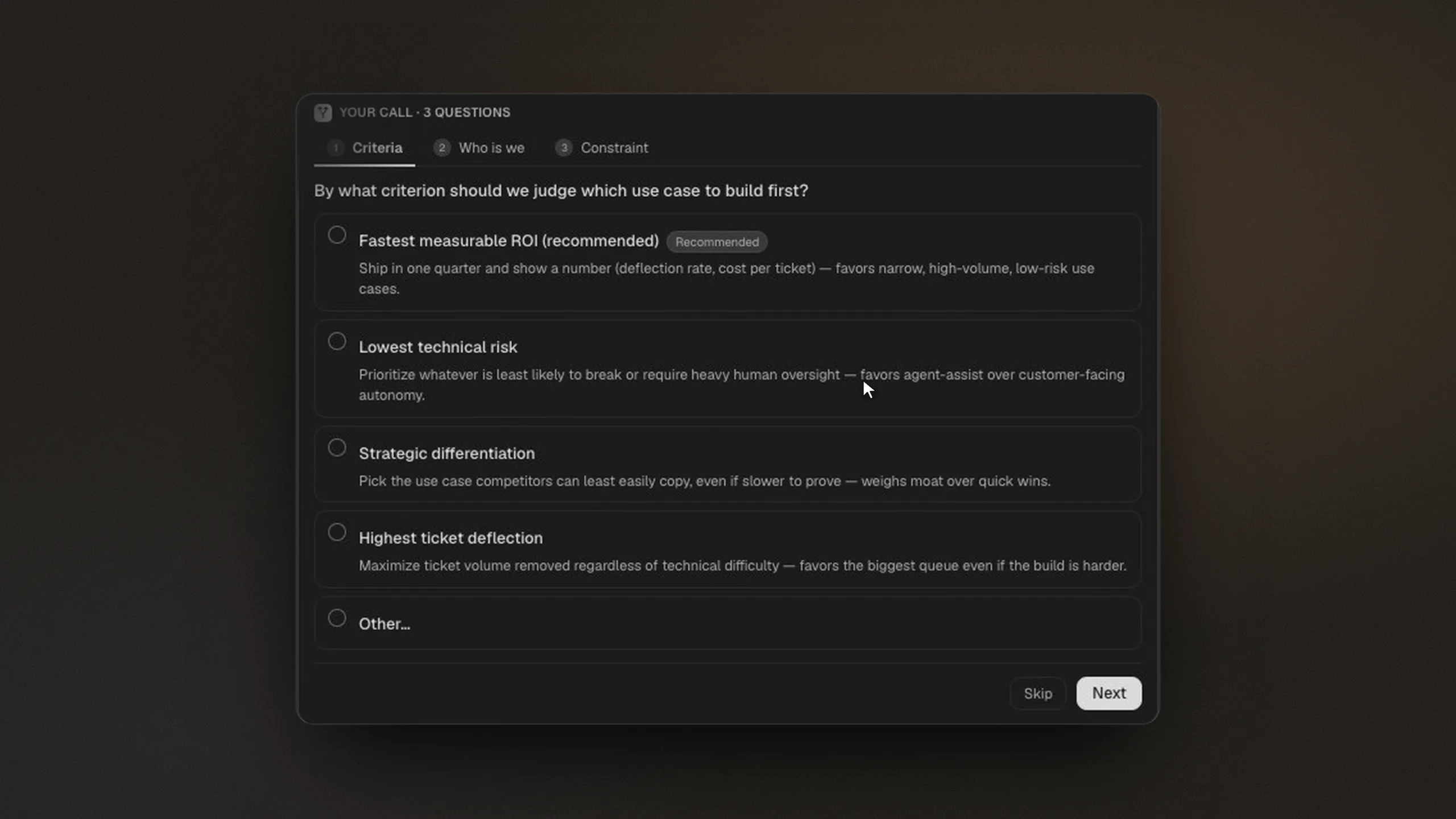
Asks what you mean before it researches
A search box takes your question literally. When a request is ambiguous, Citaria asks a few targeted questions, such as how to judge the options or which constraint matters most, then builds the research plan around your answers.
Consensus plans its own sub-searches for deep reviews; its documentation does not describe asking you clarifying questions before research begins.
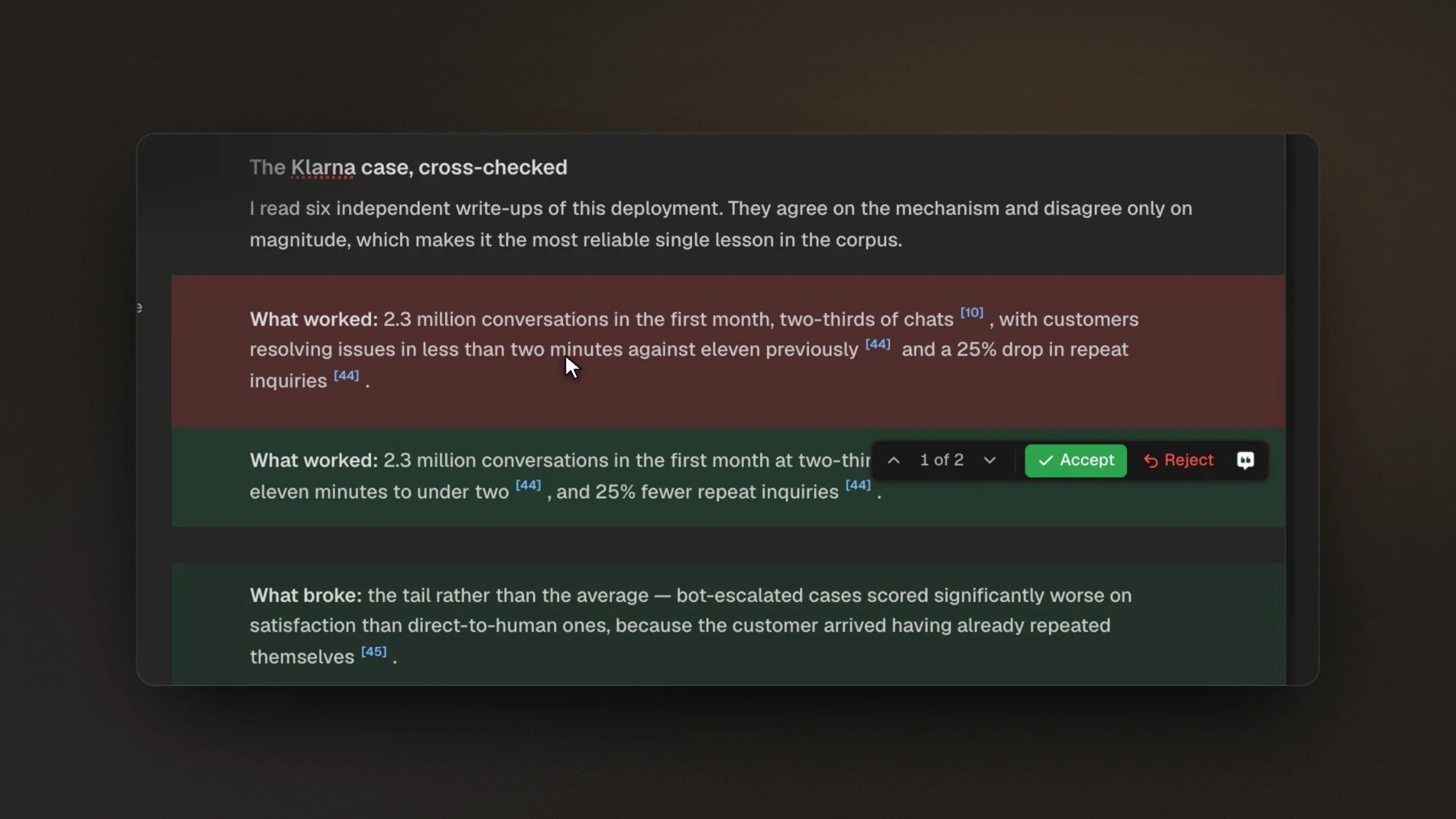
Marks every AI edit for your review
Citaria writes a document you keep refining. Follow-up questions update the document in place, and each AI revision is marked as a tracked change you can accept or reject, so the report stays one version you control.
Consensus reports can be exported as PDF or copied with citations; its documentation does not describe editing a report in the product or reviewing individual AI revisions.
Citaria vs Consensus: feature comparison
| Feature | Citaria | Consensus |
|---|---|---|
| Best for | Research reports you need to defend, claim by claim | Fast, cited answers from peer-reviewed research |
| Sources | Your files, recordings, and the open web | Peer-reviewed papers, plus PDFs you upload |
| Before research | Asks clarifying questions when a request is ambiguous | Not described in Consensus's documentation |
| Study filters | Not a dedicated feature | Journal rank, study design, sample size, and more; retracted papers excluded |
| Quality check | A separate evaluator model audits every finished report | Relevance checks on each paper before synthesis |
| Output | An editable research report with every AI edit tracked | Cited answers and literature reviews, exportable as PDF |
| Price to start | Free tier | Free plan with limited Pro messages and deep reviews; paid plans available |
Is Citaria better than Consensus?
They are built for different jobs. Consensus is better for a fast, cited answer on what peer-reviewed studies say, with filters for study quality. Citaria is better when the question also needs the open web or recordings, and the output is a report someone will rely on, because Citaria audits each report.
Can Citaria search academic papers like Consensus?
Citaria researches the open web, which includes many published papers and preprints, alongside your own files and recordings. It does not offer academic filters such as journal rank or study design; for a search limited to peer-reviewed studies, Consensus is the more specialized tool.
Does Consensus check the reports it writes?
Consensus checks each paper's relevance before it writes and excludes retracted papers. Its documentation does not describe a separate model auditing the finished report; in Citaria, a separate evaluator model audits every report before you read it.
Can I use Consensus and Citaria together?
Yes. A natural split is to check what the peer-reviewed research says in Consensus, then bring those findings into Citaria to research the wider question with your own files, recordings, and current web sources.
Is Citaria free?
Yes. Citaria has a free tier, so you can run real research and check every citation before choosing a paid plan.