AI literature reviews that cite the abstract or passage behind each claim
Map the literature, from foundational work to recent critiques, with each claim tied to the abstract or passage used.
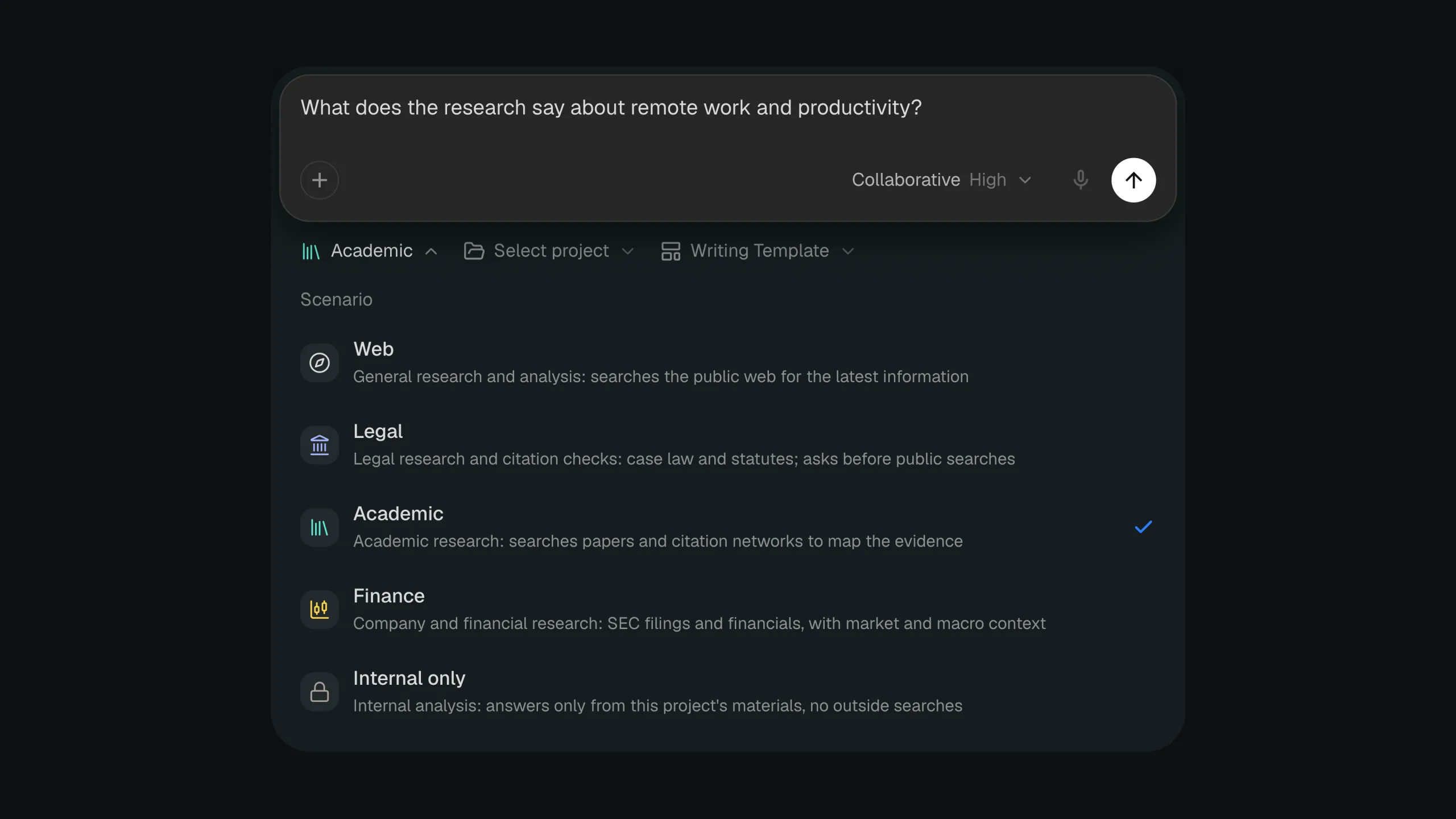
In short
The Academic scenario turns Citaria into a research assistant for scholarly questions. It searches papers through OpenAlex by keyword or meaning, follows citation networks, excludes retracted papers by default, and cites the abstract, open-access passage, or uploaded paper behind each claim, grading evidence by strength.
- Turn it on
- Choose Academic in the Scenario menu next to the message box
- Search
- Scholarly works via OpenAlex: keyword or semantic search, DOI checks, citation graph
- Reading
- Abstracts and records; full text from open-access web pages and your PDF uploads
- Retractions
- Excluded by default and flagged if read
- Citations
- Open the abstract sentence or passage that was used
- Not included
- Paywalled full text you have not uploaded; reference-manager export
How does the Academic scenario work?
Maps the field
Citaria first looks up any paper you name, by DOI or title. It combines keyword and semantic searches, then follows citation networks to find foundational work, existing reviews, recent studies, and critiques. Retracted papers are left out by default.
Research outline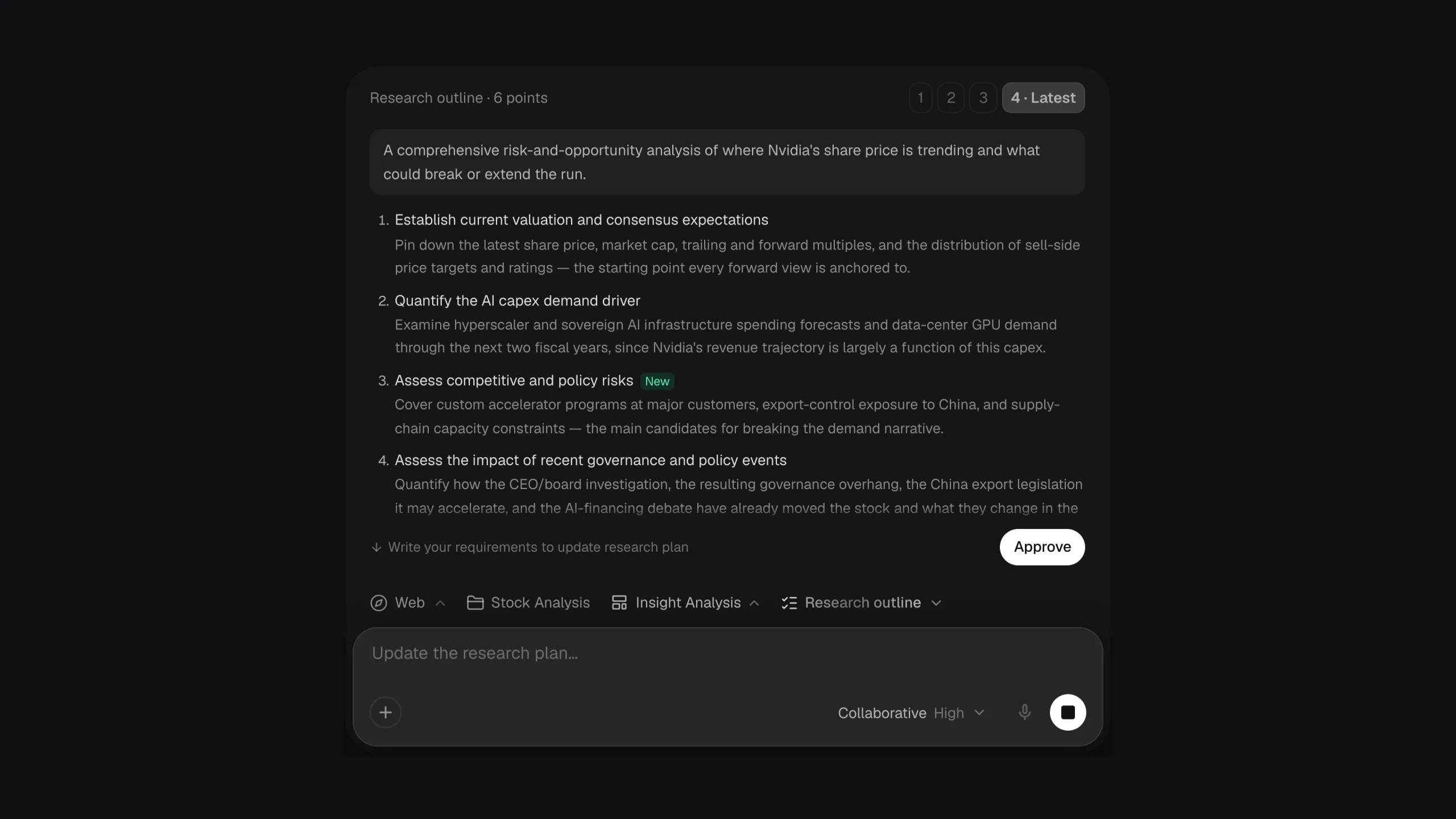
Cites the abstract or passage it read
For most papers Citaria reads the abstract; for open-access web versions and PDFs you upload, the full text. Each claim opens the sentence it relied on, and preprints are labeled.
Passage-level citations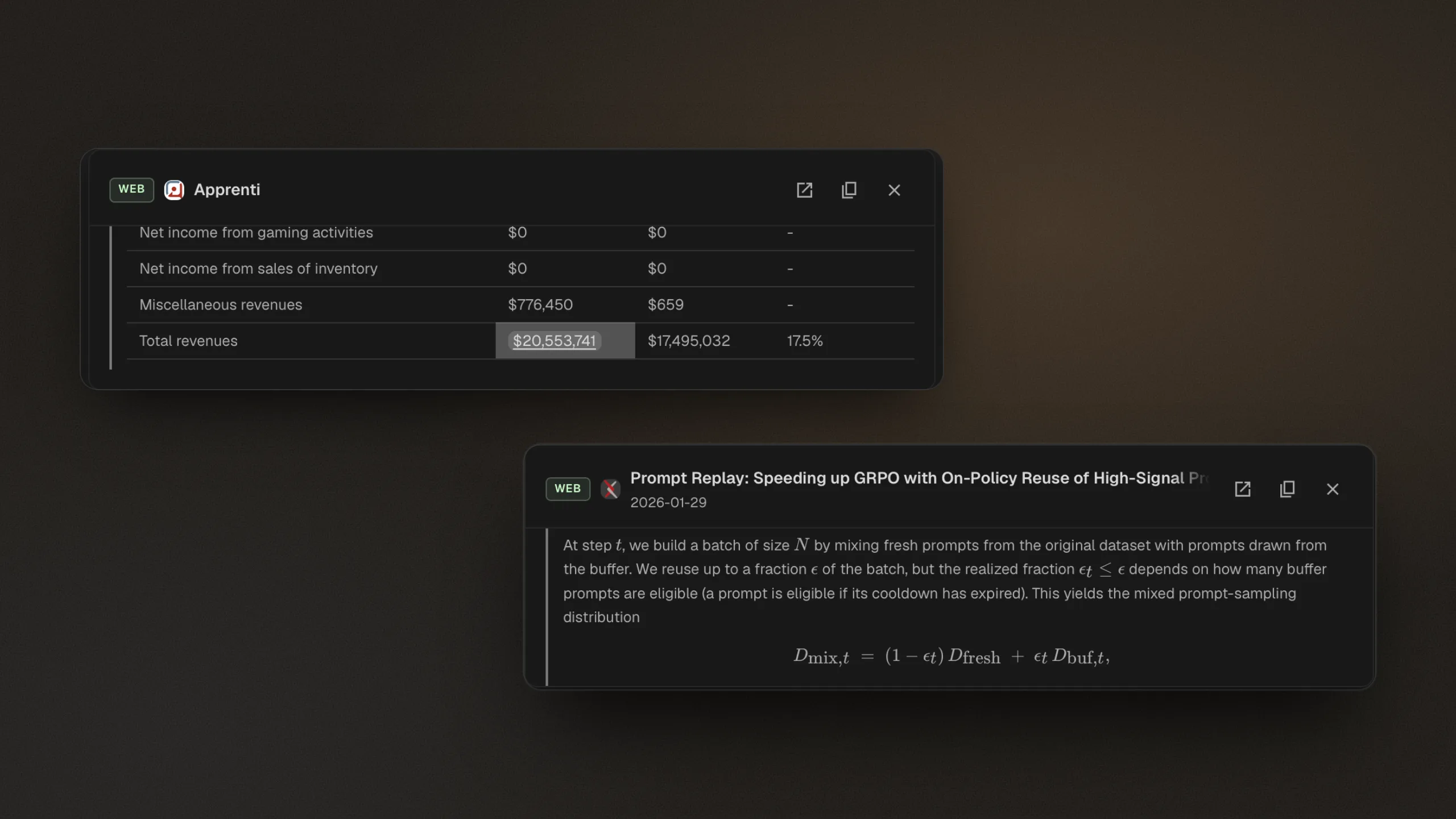
Audited once it is written
A separate audit pass rates the finished review for confidence, consistency, completeness, and freshness, and lists the issues before you share it.
Independent audit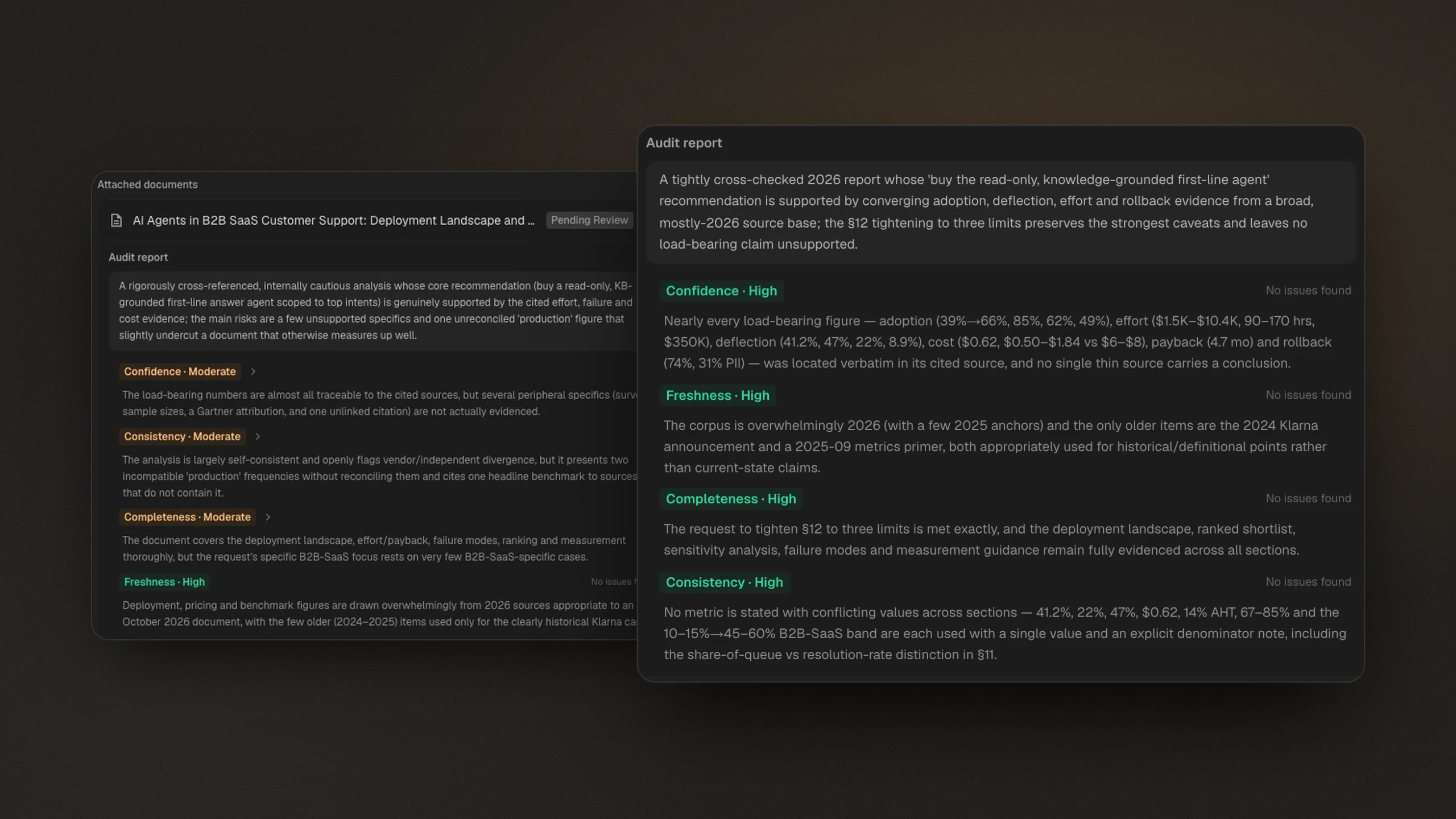
Is the Academic scenario right for your research?
Best for
- Mapping a field: foundational work, reviews, recent studies, critiques, and replications
- Checking that papers you were given exist and say what you think they say
- Combining published literature with the papers and recordings you upload
Not for
- Reading paywalled full text you have not uploaded
- Systematic review screening and data extraction
- Searching by author or institution, or exporting to a reference manager
What should you look for in an AI tool for a literature review?
| Criterion | Why it matters | What good looks like | How Citaria does it |
|---|---|---|---|
| Cites what it actually read | An abstract does not support every claim about a paper | Claims tied to the abstract or passage used | Each claim opens the abstract sentence or passage it relied on |
| Handles retractions | Retracted work still circulates | Retracted papers excluded or flagged | Excluded by default; flagged if read |
| Weighs evidence | Not all studies count equally | Evidence graded; preprints labeled | Grades evidence by strength and labels preprints |
| Checks the papers you name | Citations you were given can be wrong | Named papers looked up first | Checks DOIs and records for the papers you name |
What the Academic scenario does not do
- For most papers Citaria reads the abstract and bibliographic record; it reads the full text only when an open-access version is a web page or you upload the paper.
- Keyword search matches English terms; semantic search accepts questions in any language.
- No search by author or institution, and no export to a reference manager.
- No systematic review screening or data extraction workflow.
Can AI do a literature review with citations to the source?
Yes. In the Academic scenario, Citaria searches scholarly papers, follows citation networks, and cites the abstract, open-access passage, or uploaded paper behind each claim, so you can open the source and check it.
Does Citaria read the full text of papers?
When an open-access version is available as a web page, or when you upload the PDF. Otherwise Citaria reads the abstract and bibliographic record, and only claims what the abstract supports.
How does Citaria handle retracted papers?
Retracted papers are excluded from search results by default. If Citaria reads one, it flags the retraction and does not use the paper as evidence.