Citaria vs Scite
From how papers cite each other to whether your report holds up
Scite is an AI research tool built on Smart Citations, which show whether later papers support or contrast a finding. Citaria is built for research reports you have to defend: Citaria researches the open web and recordings alongside your files, audits each finished report with a separate evaluator model, and shares reports readers can check themselves.
Should you use Scite or Citaria?
Choose Scite when you need
- Seeing whether later papers support or contrast a finding
- Checking a manuscript for retracted or contested references
- Answers grounded in scholarly literature, including licensed full text
Choose Citaria when you need
- Questions that need the open web and recordings, not only papers
- An independent audit of the finished report
- A report you can share for readers to verify claim by claim
What can Citaria do that Scite doesn’t?
Goes beyond papers to the web and recordings
Many questions need more than the scholarly record: market news, product pages, interview recordings. Citaria researches the open web alongside your project files, and cites audio and video at the moment a statement was made.
Scite grounds its answers in scholarly literature and documents you upload, rather than the open web; its documentation does not describe working with audio or video.
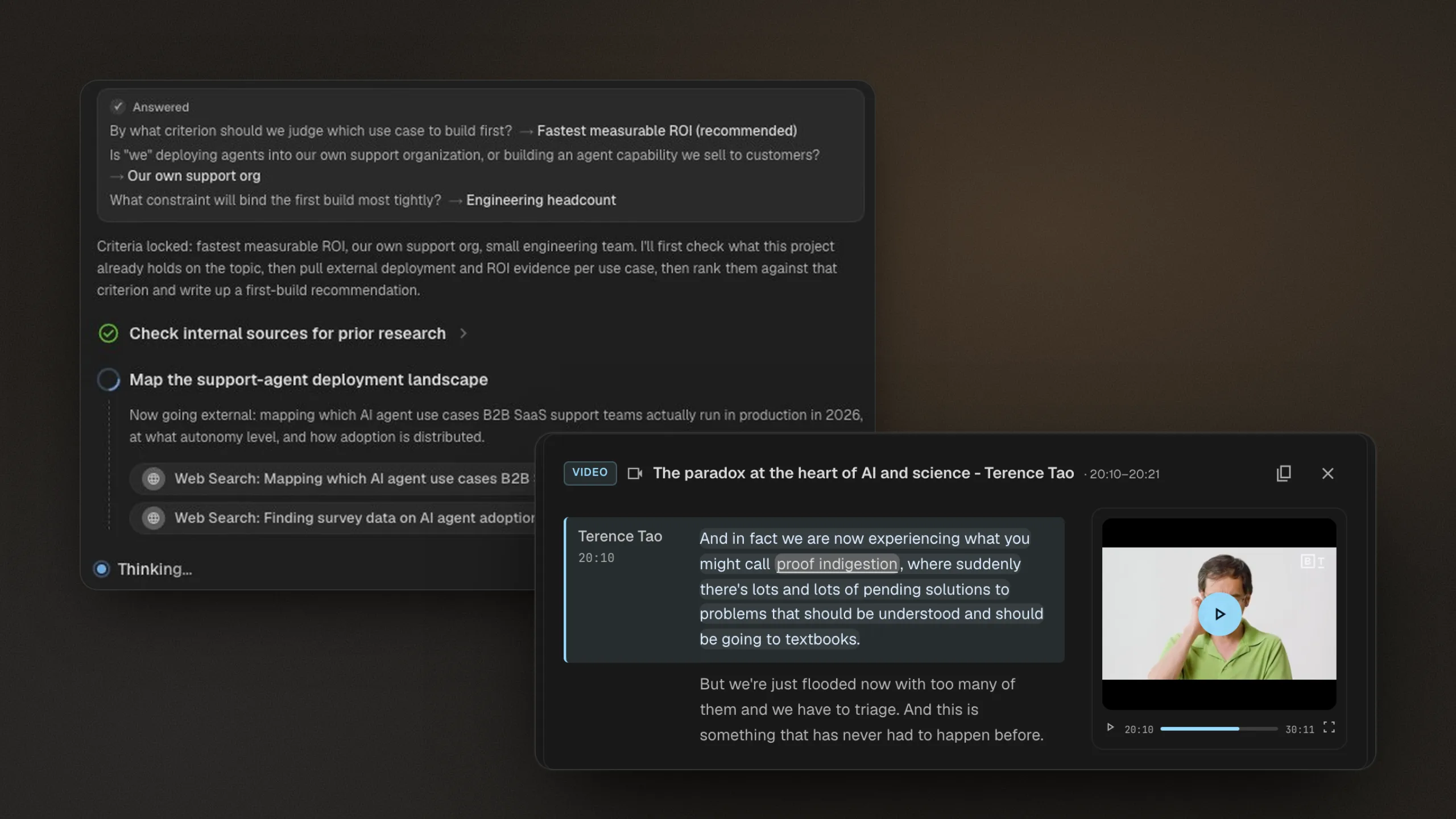
Audits the finished report, not just its references
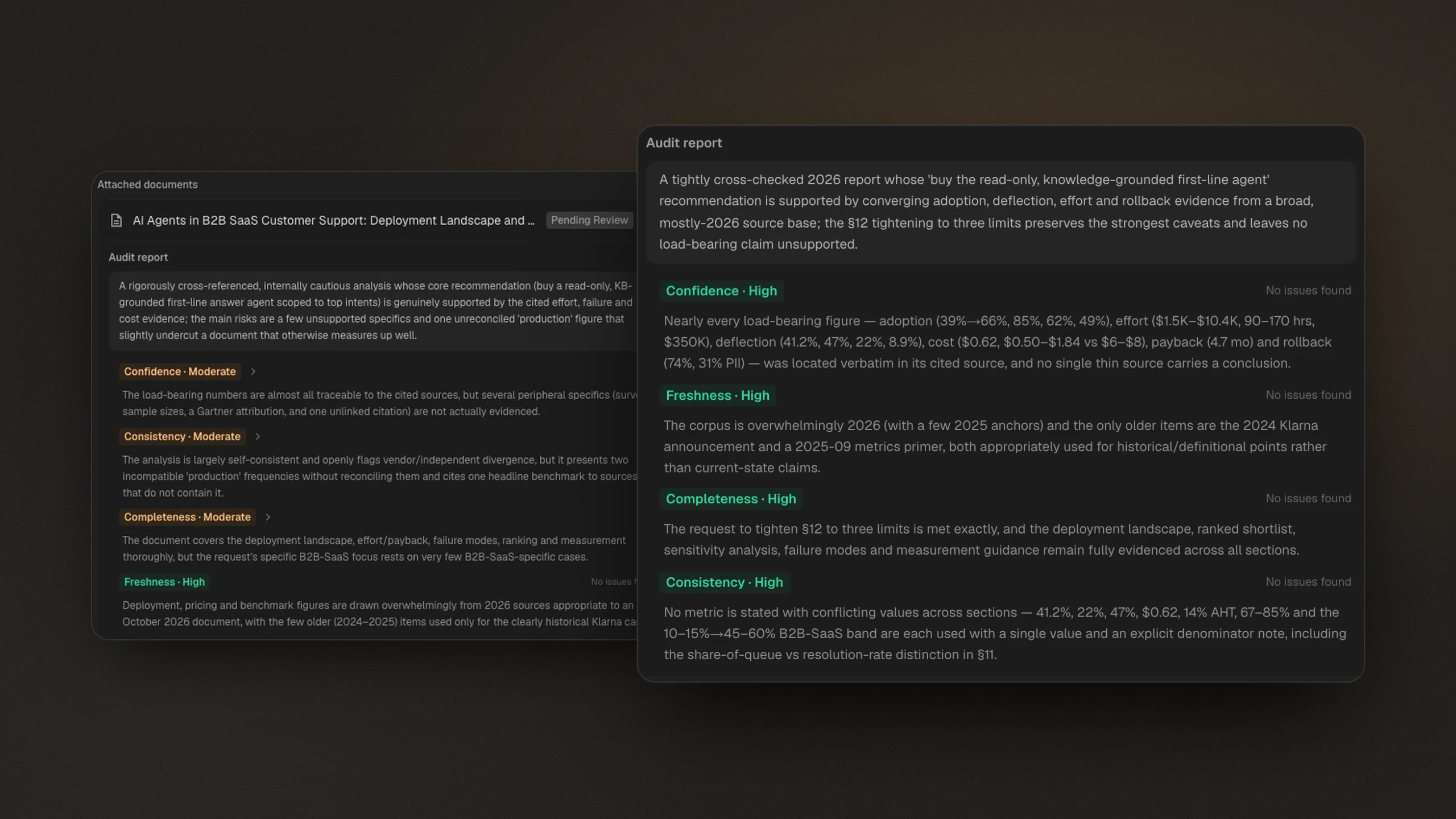
Sound references do not guarantee a sound synthesis. Before you read a Citaria report, a separate evaluator model grades it for confidence, consistency, completeness, and freshness, then Citaria revises what the audit flags and audits the revised draft again.
Scite's Reference Check flags retractions, editorial notices, and contrasting citations among a manuscript's references; its documentation does not describe a separate model auditing Assistant answers.
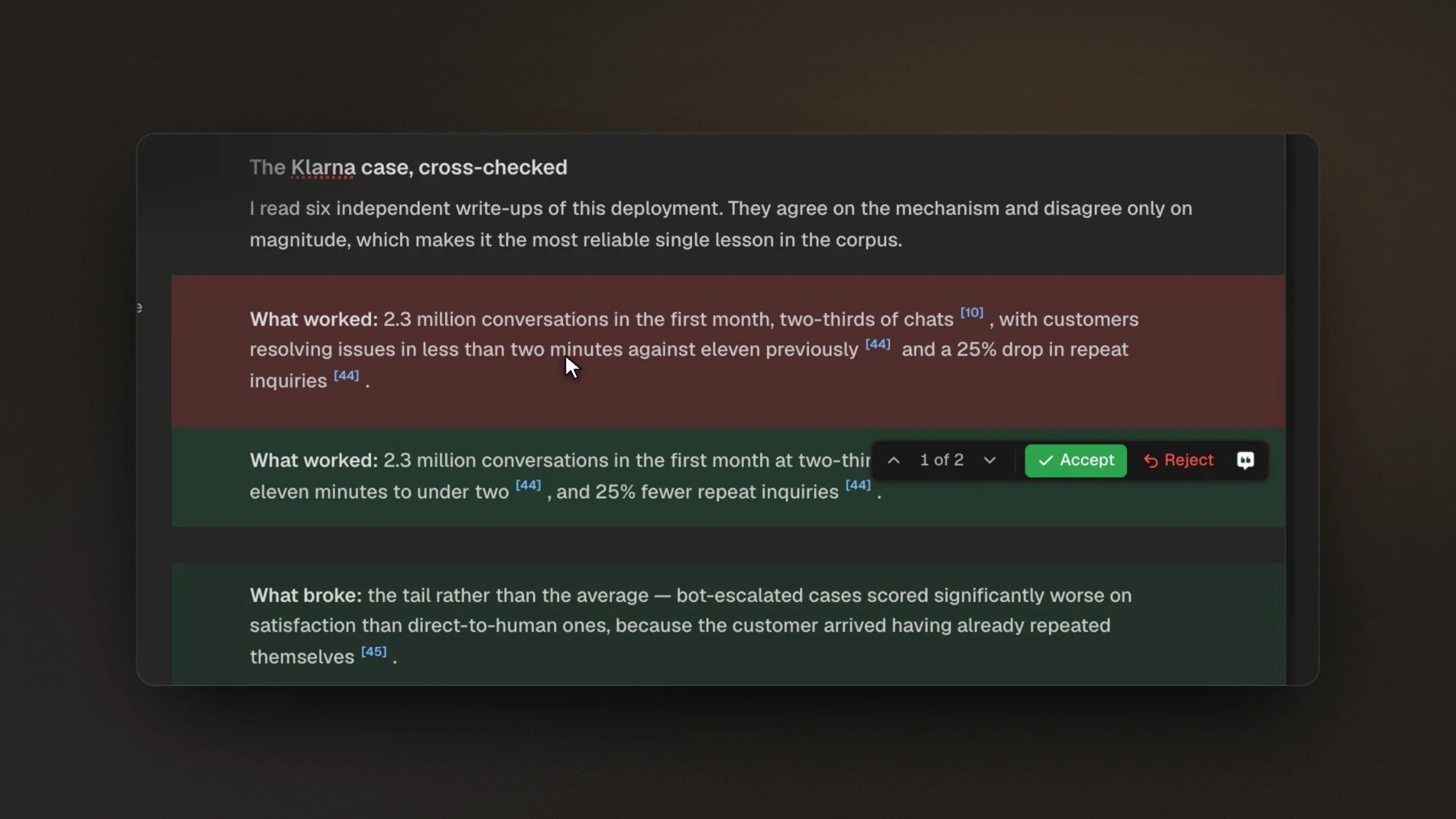
Marks every AI edit for your review
Citaria writes a document you keep refining. Follow-up questions update the document in place, and each AI revision is marked as a tracked change you can accept or reject, so the report stays one version you control.
Scite Assistant answers as a conversation or a table of papers; its documentation does not describe editing a report or reviewing individual AI revisions.
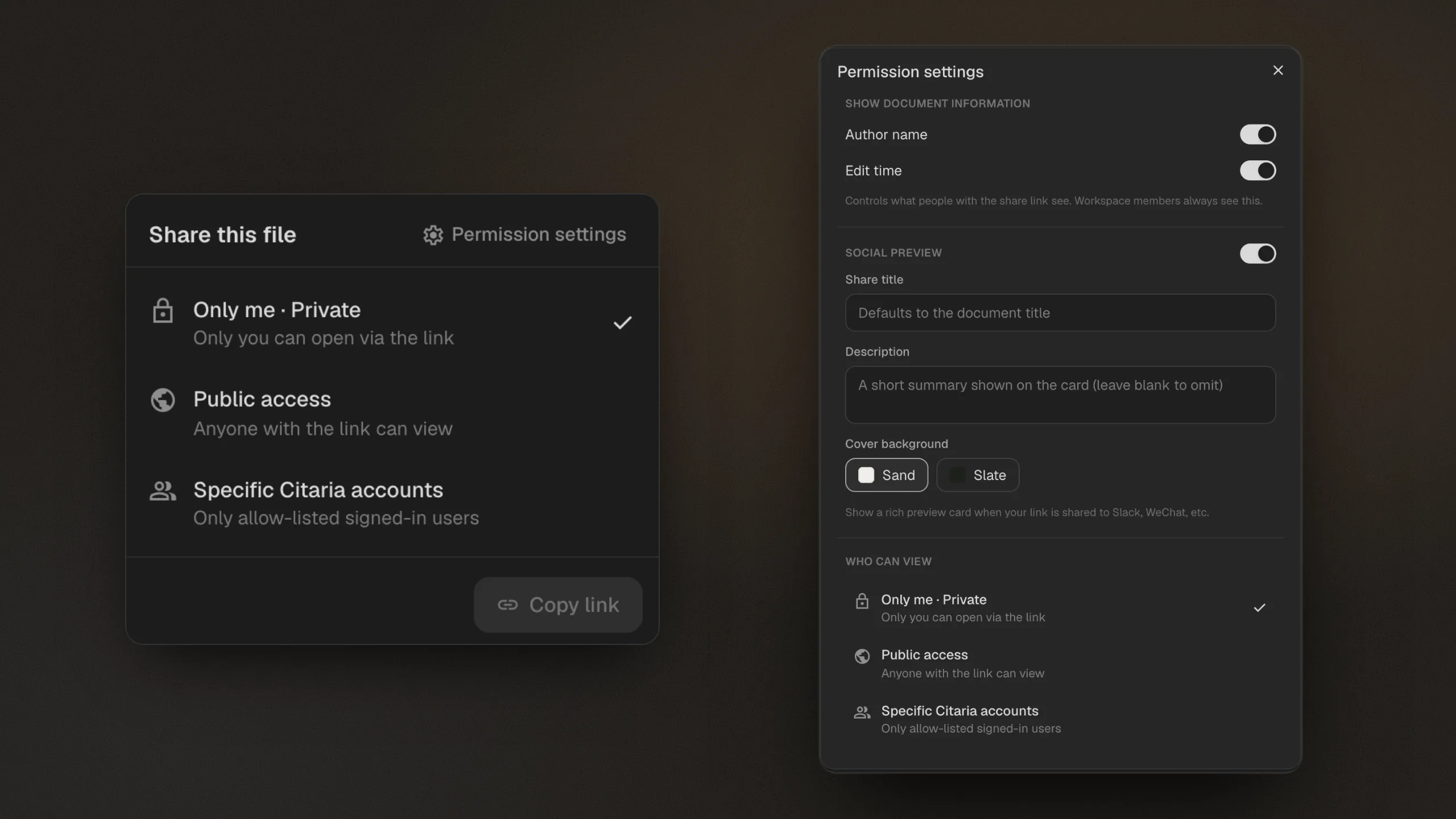
Shares a report your readers can check themselves
Share a Citaria report privately, with specific Citaria accounts, or by public link. Readers of a public report can open every cited passage and replay cited recordings without an account, and a reference list is built in.
Scite Collections and dashboards can be shared by public link; its documentation does not describe sharing Assistant answers publicly.
Citaria vs Scite: feature comparison
| Feature | Citaria | Scite |
|---|---|---|
| Best for | Research reports you need to defend, claim by claim | Seeing how research has been cited, supported, or contrasted |
| Sources | Your files, recordings, and the open web | Scholarly literature, including licensed full text, plus documents you upload |
| Citation context | Opens the cited passage, highlighted in the source | Smart Citations classify citing statements as supporting, contrasting, or mentioning |
| Quality check | A separate evaluator model audits every finished report | Reference Check for manuscripts; retraction alerts in Collections |
| Output | An editable research report with every AI edit tracked | Cited answers, paper tables, and citation reports |
| Sharing | Private, specific Citaria accounts, or a public link readers can verify | Public links for Collections and dashboards |
| Price to start | Free tier | Free trial; paid plans available |
Is Citaria better than Scite?
They are built for different jobs. Scite is better for judging a paper by how later research cites it, and for checking a manuscript's references. Citaria is better when the output is a research report someone will rely on and the evidence includes the open web or recordings, because Citaria audits each report.
Does Citaria show whether papers support or contrast a finding?
No. Classifying how papers cite each other is what Scite's Smart Citations are built for. Citaria links each claim in its report to the passage it rests on, highlighted in the source, and audits the report as a whole.
Does Scite search the web?
Scite grounds its answers in scholarly literature and in documents you upload, rather than the open web. Citaria researches the open web alongside your project files and recordings, and links every claim to its source.
Can I use Scite and Citaria together?
Yes. A natural split is to use Scite to check whether the key papers hold up, then research the wider question in Citaria, where those findings sit alongside your own files, recordings, and current web sources in an audited report.
Is Citaria free?
Yes. Citaria has a free tier, so you can run real research and check every citation before choosing a paid plan.