AI financial research with every figure traced to its source
Filings, earnings, market data, and your own documents, researched together in one report you can check.
Citaria for finance
- 100%
of figures matched the company’s SEC filing
- 100%
of answers cited SEC filing data
- 10
rounds of audit and revision behind a typical report
Measured in November 2026 at the default High effort setting. Figures and citations: 40 questions about 20 US companies’ SEC filings, where a figure matches if it is within 0.5% and for the right period. Audit rounds: median of five research reports. How we measured
What can you research in the Finance scenario?
- Company research
Start from what the company filed
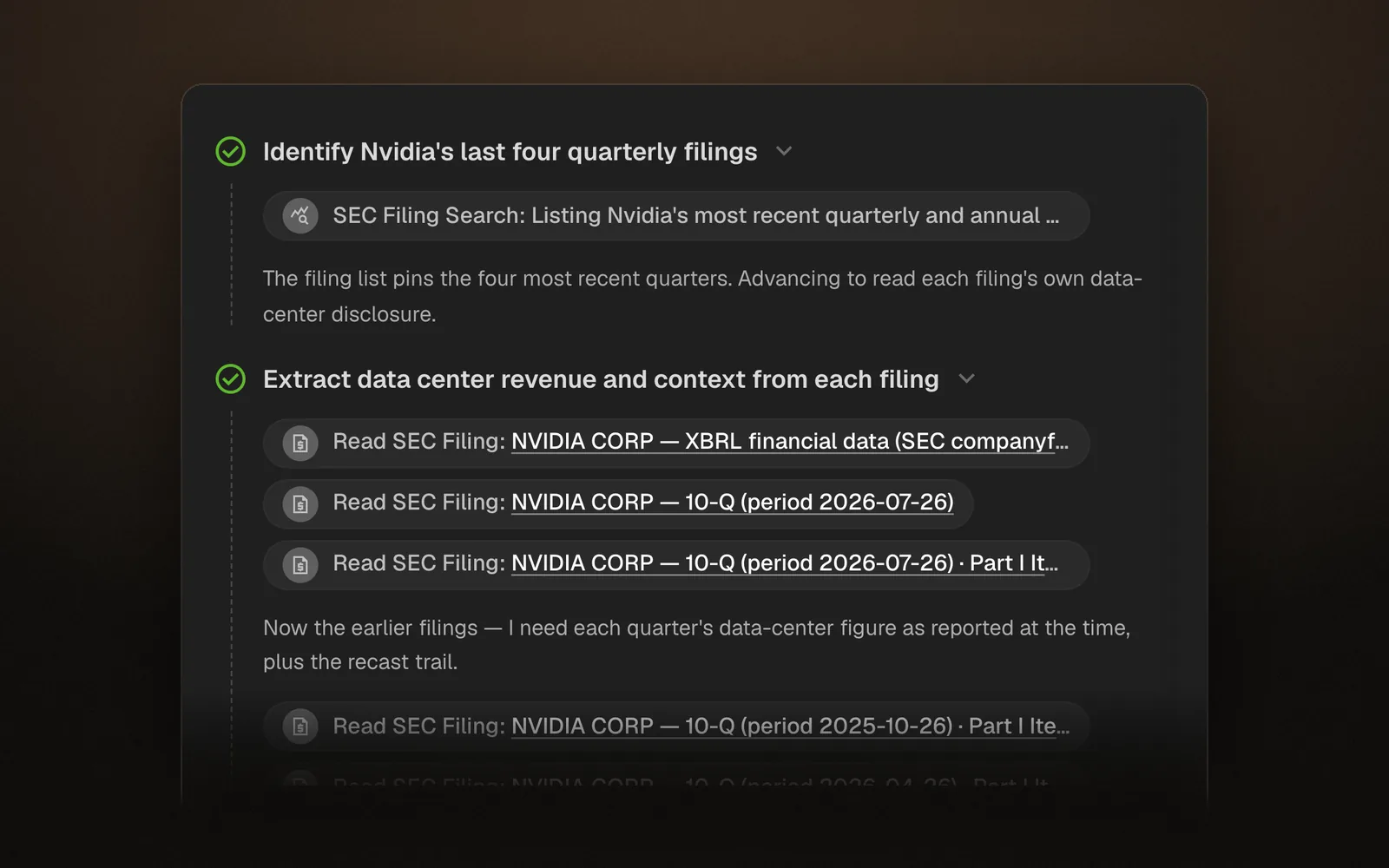
Name a company or ticker. Citaria reads its 10-K, 10-Q, and 8-K filings on SEC EDGAR, pulls five years and eight quarters of key financials, and reads the sections that explain them, such as risk factors and management’s discussion.
 SEC EDGAR
- Earnings
See what changed this quarter
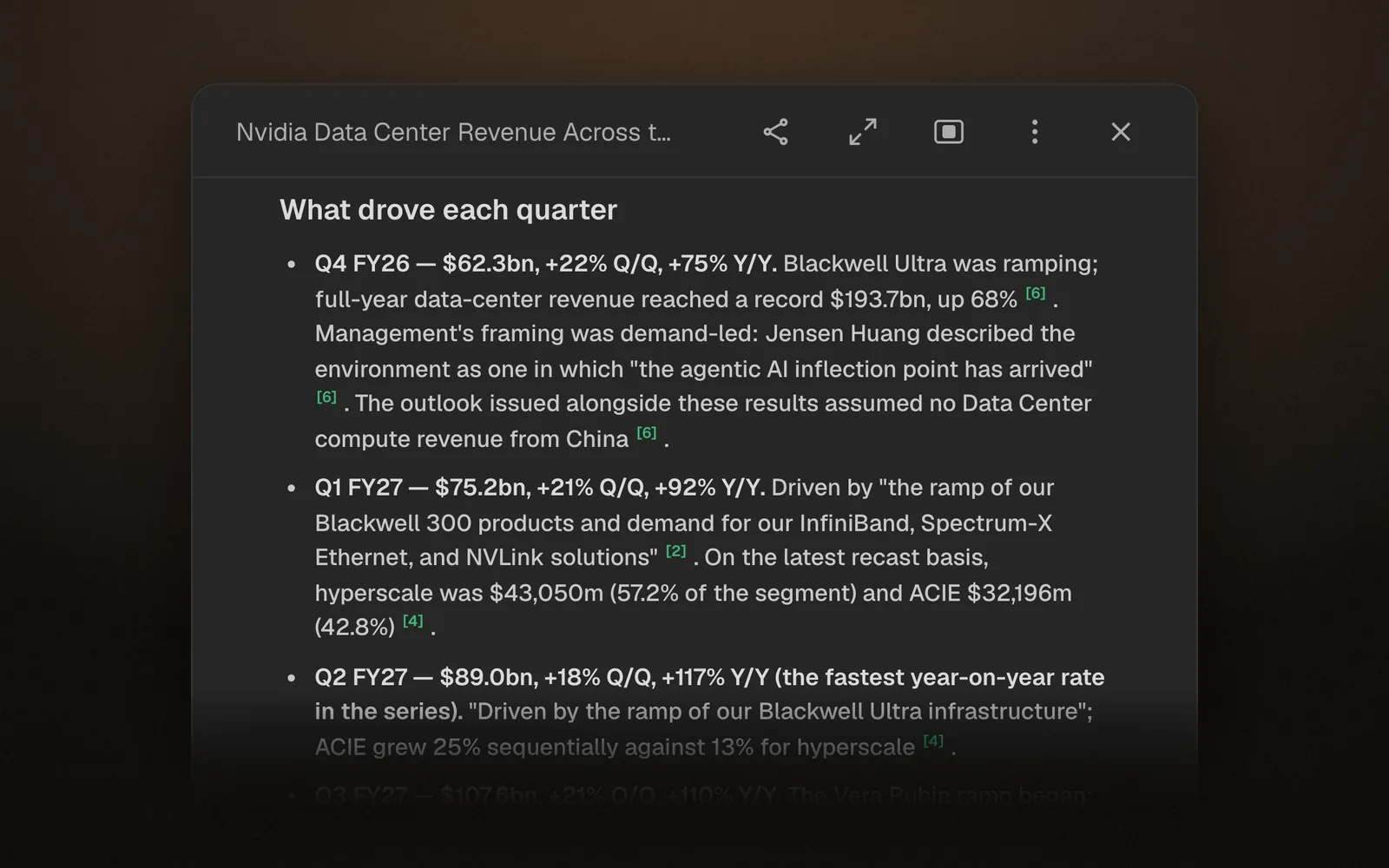
Citaria reads the latest earnings release and quarterly report, notes which version it uses when a figure was restated or recast, and sets management’s explanation beside the numbers. Consensus estimates and call commentary come from the web, each with its date.
 Earnings release · 10-Q
- Valuation
Valuation you can rerun
Share prices, market value, and multiples come from the web with an as-of date. Derived figures show their formula and inputs, and when a result hinges on an assumption, the report shows how it moves.
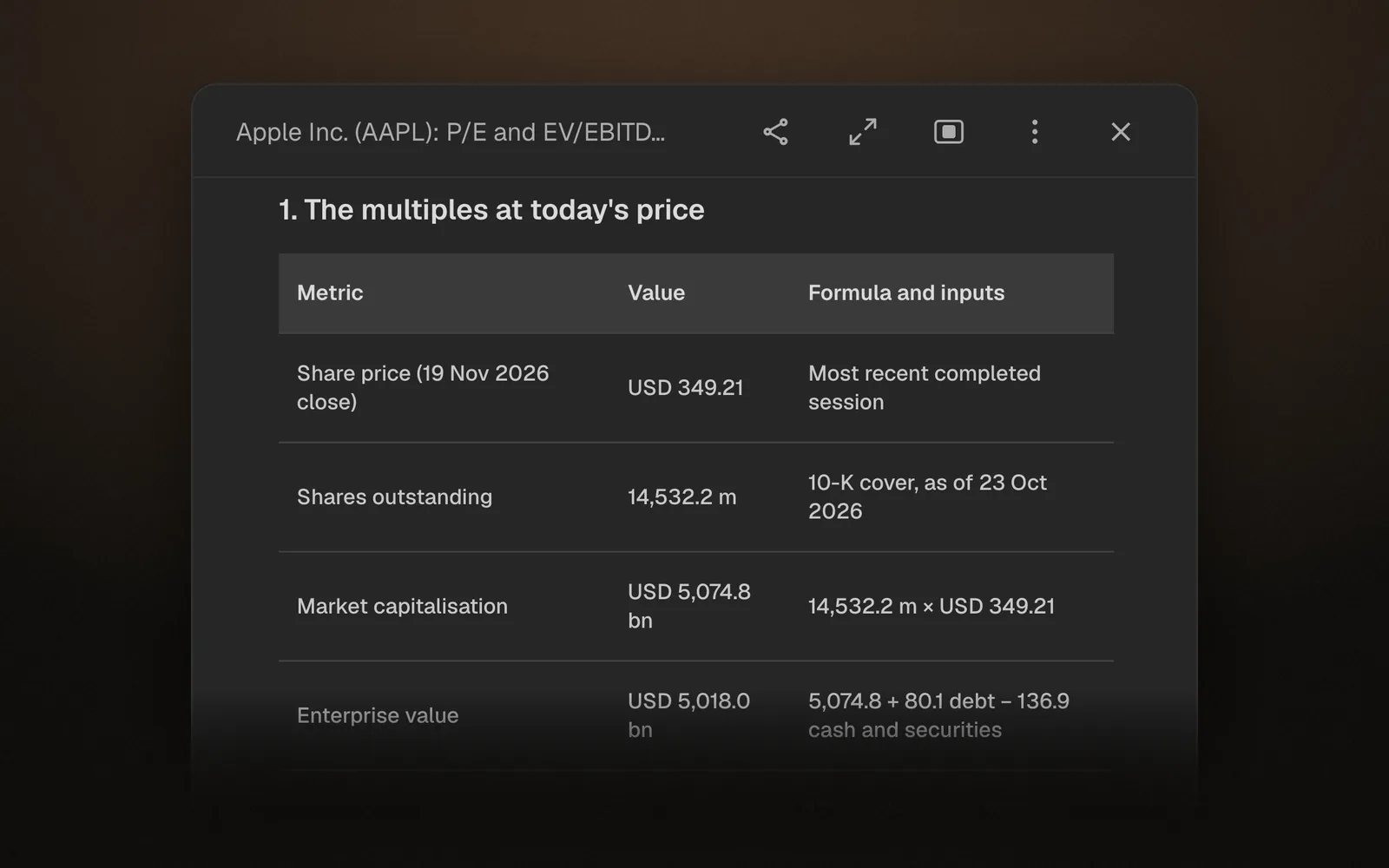 Market data
- Due diligence
Your documents and calls, with the public record
Upload PDFs, Word files, and recordings of earnings or expert calls. Citaria researches them together with the filings and the web, and a quote from a call shows the speaker and timestamp.
Audio & video citations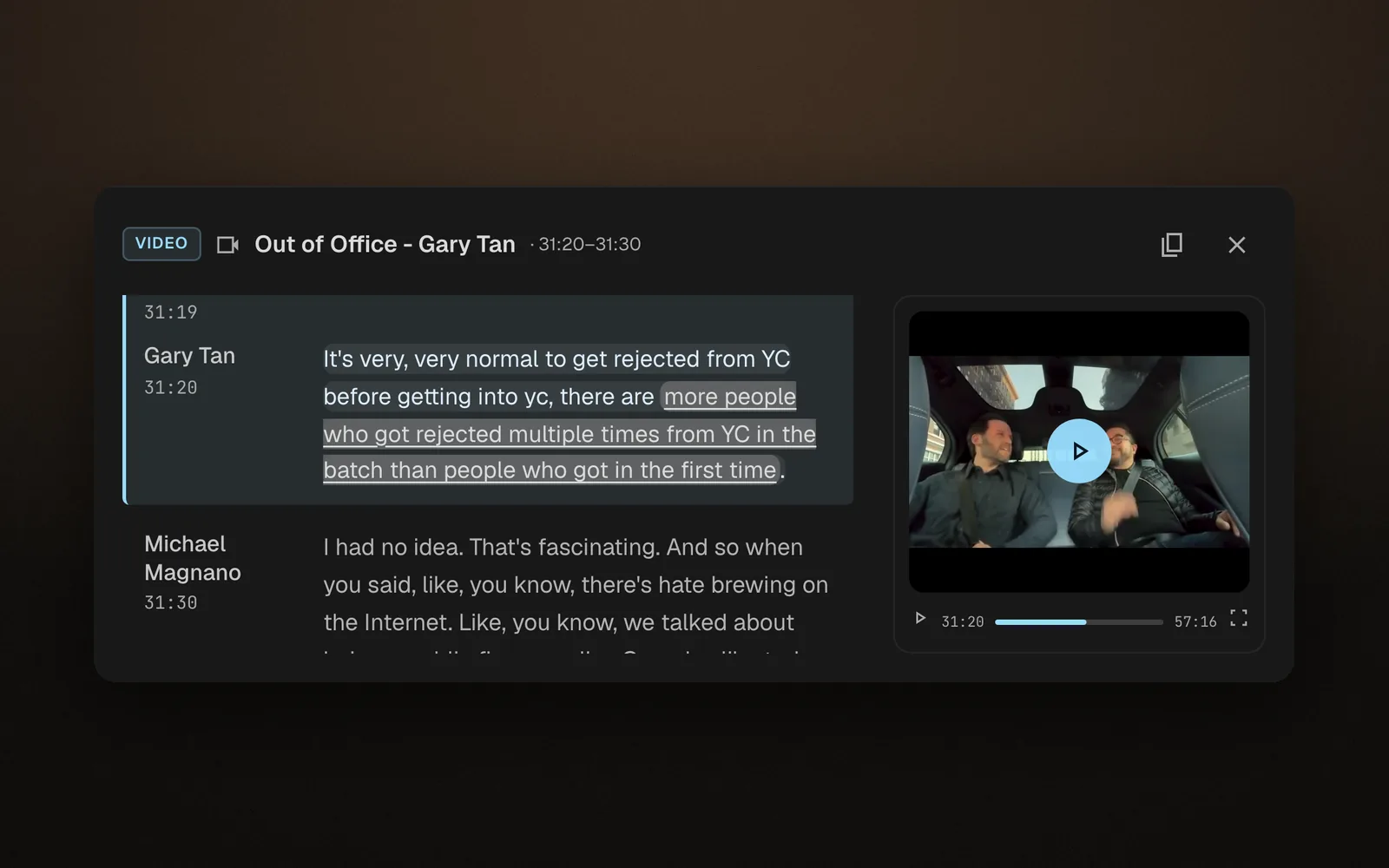 Your files
How can you check the numbers in an AI financial report?
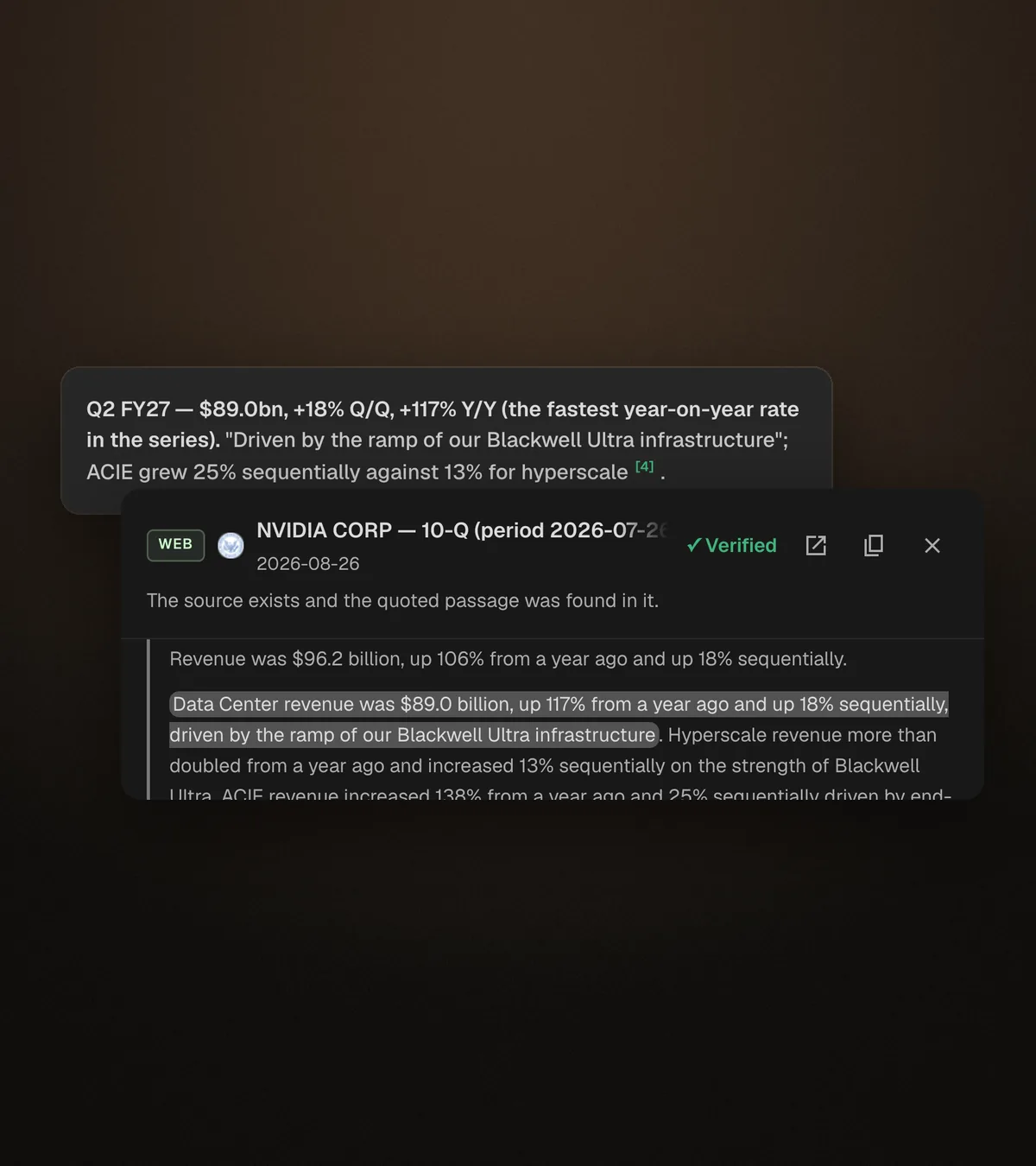
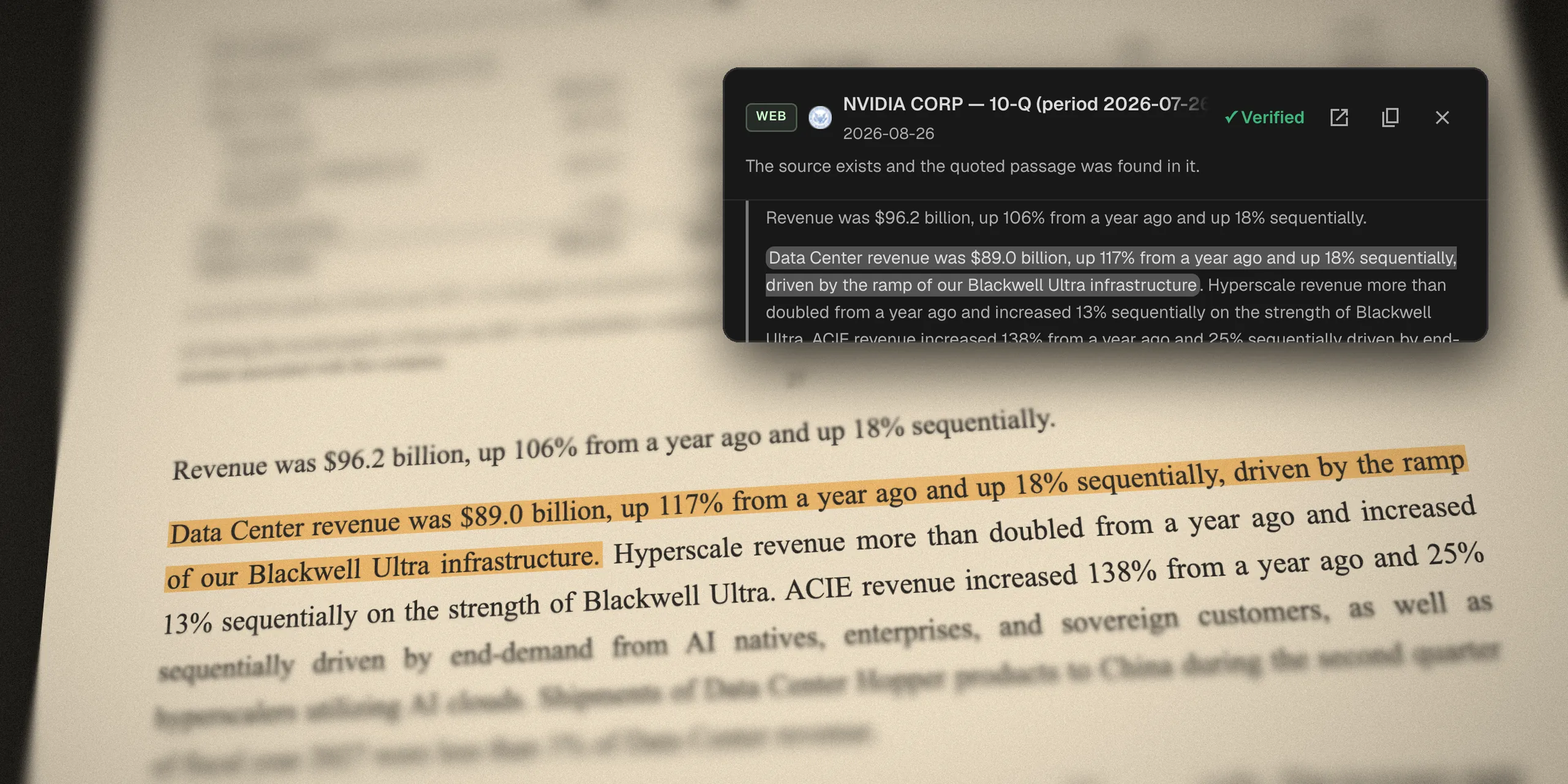
Every figure opens its source
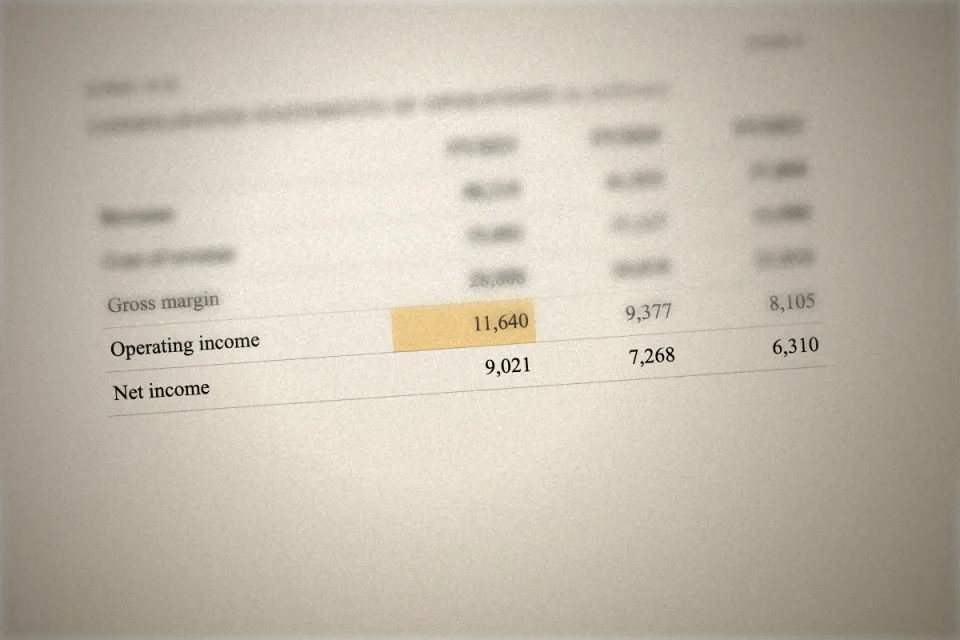
Click a figure to open the filing passage, table, or web page behind it. A quoted table cell is highlighted in place.
Passage-level citations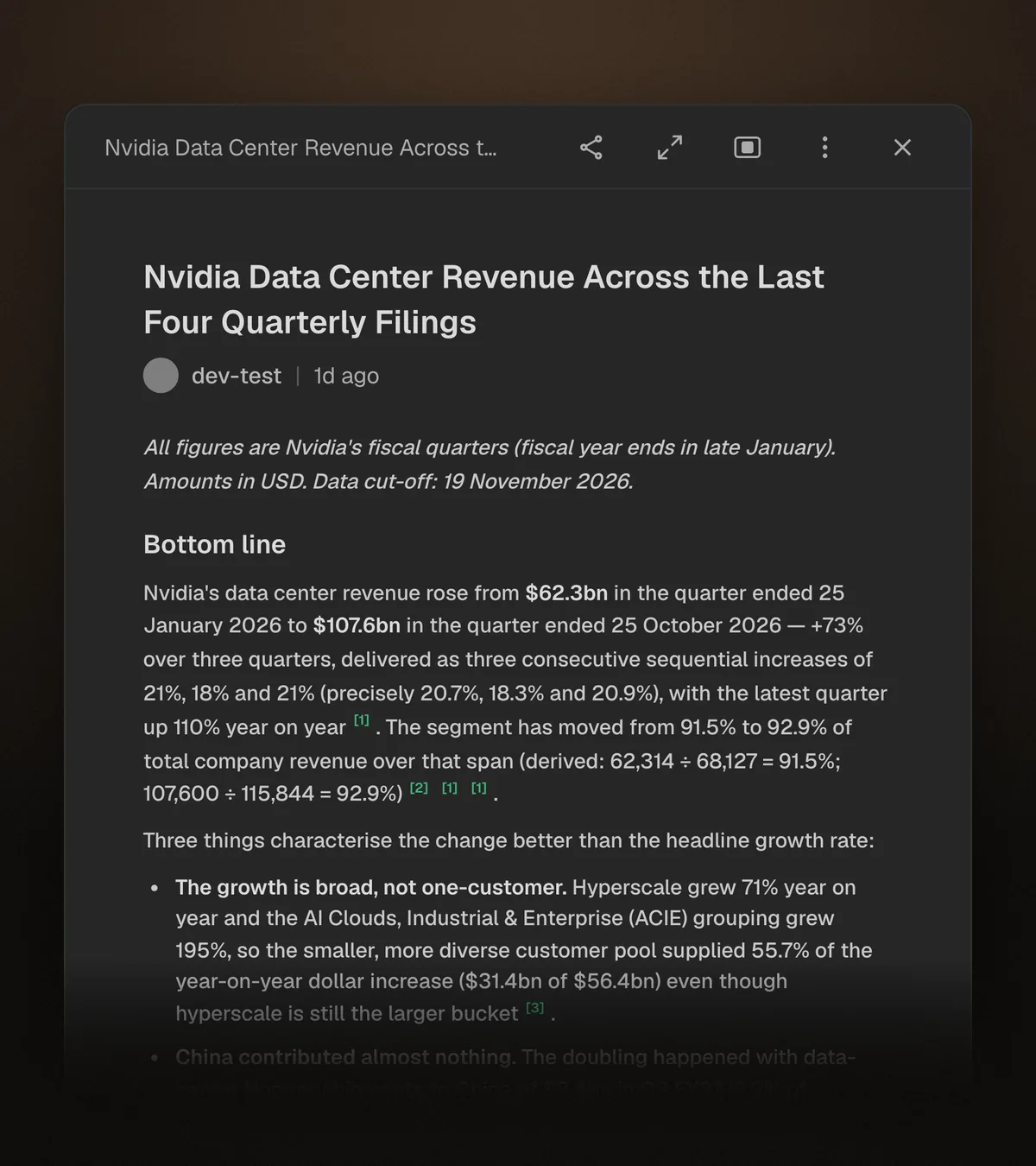
The math is on the page
Margins, growth rates, and multiples come with their formula and inputs, and each figure states its period, unit, and currency.
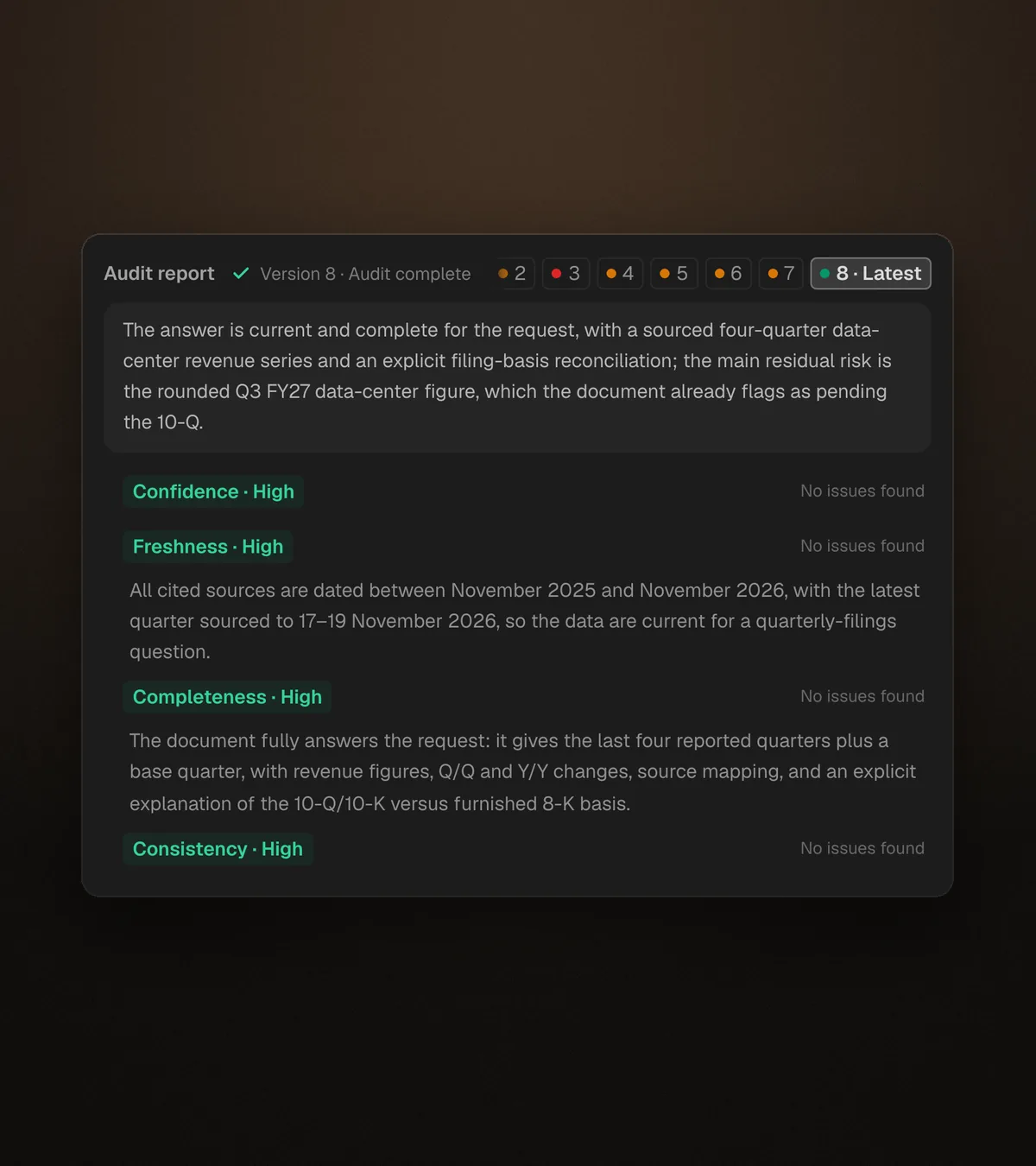
Audited once it is written
An audit rates the finished report for confidence, consistency, completeness, and freshness. Citaria revises what it flags and audits again.
Independent audit
In short
The Finance scenario turns Citaria into an AI research assistant for company and market research. It reads SEC filings and their XBRL financial data, earnings releases, market data and news from the web, and the documents and call recordings you upload, then writes a report that cites the source behind each figure.
- Turn it on
- Choose Finance in the Scenario menu next to the message box
- Sources
- SEC filings and XBRL data; the web for prices, news, and estimates; official statistics; your files and recordings
- Filings
- 10-K, 10-Q, 8-K and exhibits, 20-F, 40-F, 6-K, proxy and registration statements; full-text search since 2001
- Financial data
- XBRL key metrics for 5 fiscal years and 8 quarters, as filed, using the latest filing for each period
- Market data
- Prices, market value, and multiples from the web, each with an as-of date; no real-time feed
- Citations
- Filing passages and tables, with a quoted cell highlighted in place; recordings with speaker and timestamp
What should you look for in AI financial research?
| Criterion | Why it matters | What good looks like | How Citaria does it |
|---|---|---|---|
| Answers from primary sources | Summaries and secondary sources drift from what was filed | Each figure points to a filing or a dated source | Cites the filing passage, XBRL table, or dated web page behind each figure |
| Clear periods and units | Mixed fiscal periods lead to wrong comparisons | Period, unit, and currency stated | Reports state period, unit, and currency, and label non-GAAP figures |
| Derived numbers you can recheck | You need to check the math | Formula and inputs visible | Derived values are written out with their formula and inputs |
| Prices with a date | Prices change by the minute | Every price carries an as-of date | Market prices come from the web with an as-of date |
| An independent check of the output | Errors cost more once a memo circulates | A second check before you share it | A separate audit pass rates the finished report and lists issues; it does not guarantee every rating is high |
How accurate is Citaria on financial figures?
In a November 2026 test, the Finance scenario answered all 40 questions about 20 US companies’ SEC filings with the filed value, within 0.5%, and the right period, citing the filing or its XBRL data each time. Questions and filed values were fixed beforehand. The test’s five research reports took a median of 10 rounds of audit and revision, and all 173 quoted passages matched their sources word for word.
Can AI analyze 10-K filings with citations?
Yes. In the Finance scenario, Citaria reads 10-K, 10-Q, and other SEC filings and cites the filing passage or financial table behind each claim, so you can open the source and check it.
Where do Citaria’s financial figures come from?
Company figures come from the filings themselves: XBRL key metrics as filed, using the latest filing for each period, and the text and tables of each filing. Prices and multiples come from the web with an as-of date, macro figures come from statistics offices and central banks, and derived values show their formula and inputs.
Can Citaria research companies that do not file with the SEC?
Yes, from the web and the documents you upload, such as annual reports and investor presentations. The SEC filing tools cover companies that file with the SEC, including foreign companies that file 20-F or 40-F reports.
Does Citaria offer real-time stock prices or a stock screener?
No. Prices, market value, and multiples come from web sources with an as-of date, not a real-time feed. Citaria researches the companies you name and can compare a few side by side, but it does not screen a whole market.
Can I research my own data room files and call recordings with Citaria?
Yes. Upload PDFs, Word documents, and audio or video recordings, up to 2 GB each, and Citaria researches them together with the filings and the web. Quotes from recordings show the speaker and timestamp.
Citaria’s reports are for information only, not investment advice.
Research you can defend, with every figure cited
Free to use