Citaria vs ChatGPT Deep Research
From long reports to findings you can defend line by line
ChatGPT Deep Research is built for broad research across hundreds of web sources and your connected files. Citaria is built for research you have to stand behind: Citaria audits every finished report with a separate evaluator model, links each claim to the exact source passage, and keeps that passage with the report.
Should you use ChatGPT Deep Research or Citaria?
Choose ChatGPT Deep Research when you need
- A broad first pass across hundreds of web sources
- Research inside the ChatGPT workspace you already use
- A report to download as Markdown, Word, or PDF
Choose Citaria when you need
- A report you will present, publish, or sign off on
- An independent audit before anyone reads the report
- Evidence that stays checkable months later
What can Citaria do that ChatGPT Deep Research doesn’t?
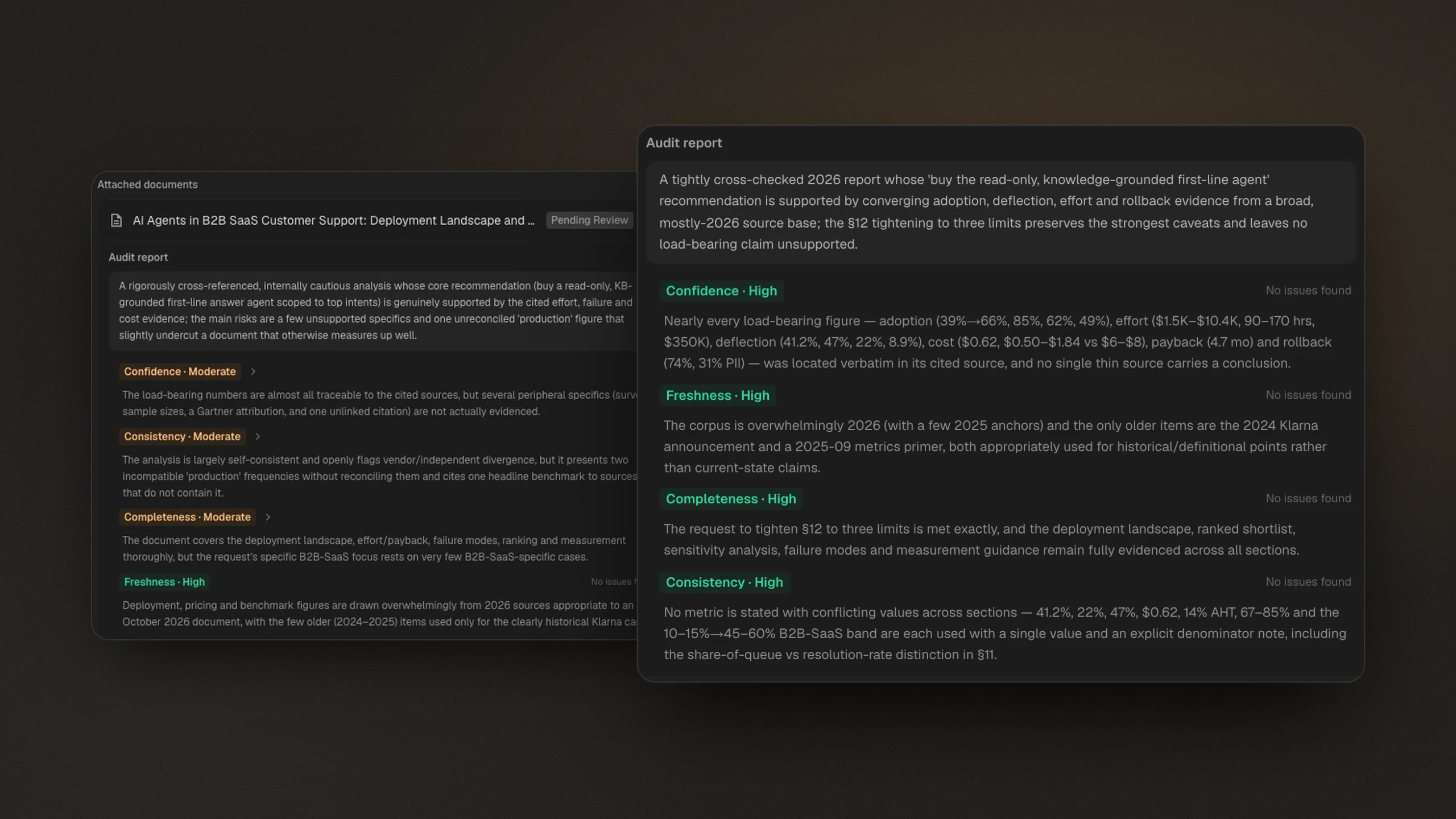
Catches citations that drift from their claims
A report built from hundreds of sources has many chances for a citation to point at something related but not quite what the sentence says. Before you read a Citaria report, a separate evaluator model grades it for confidence, consistency, completeness, and freshness, and Citaria revises what the audit flags.
OpenAI's documentation does not describe a separate fact-checking or second-model review step for ChatGPT Deep Research reports.
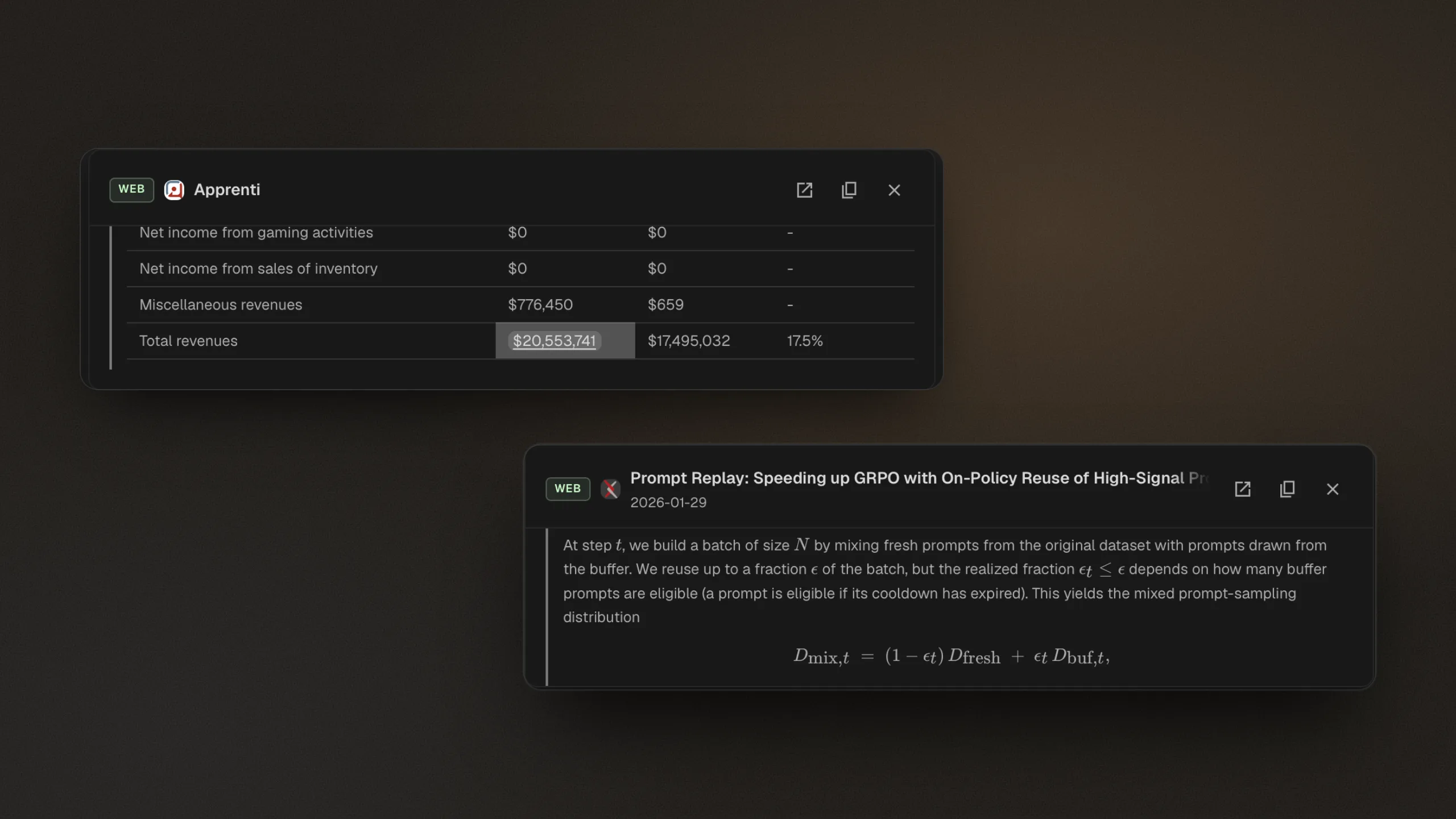
Cites the exact cell, sentence, or equation
A Citaria citation opens the source at the passage that supports the claim, highlighted in place, down to a single cell in a financial table or one equation in a paper. Checking a number takes one click instead of a search through the whole source.
ChatGPT Deep Research reports include citations and a sources section; OpenAI's documentation does not describe highlighting the cited passage inside the source.
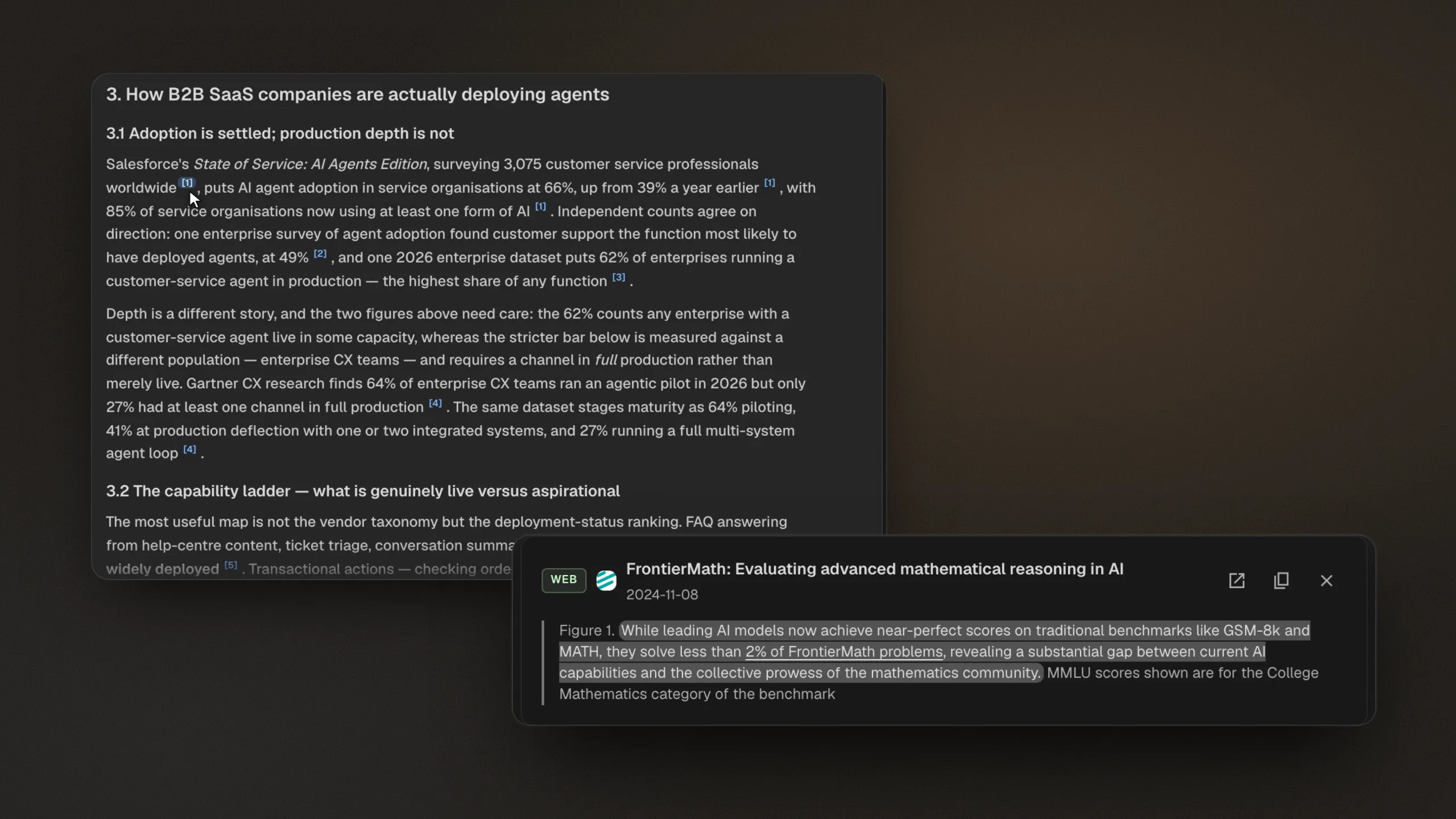
Keeps the cited passage with your report
Web pages get edited, moved, and taken down. Citaria stores each cited web passage with the report, so anyone opening the report months later still sees the exact words a claim was based on.
OpenAI's documentation describes ChatGPT Deep Research citations as source links and does not describe keeping copies of cited pages.
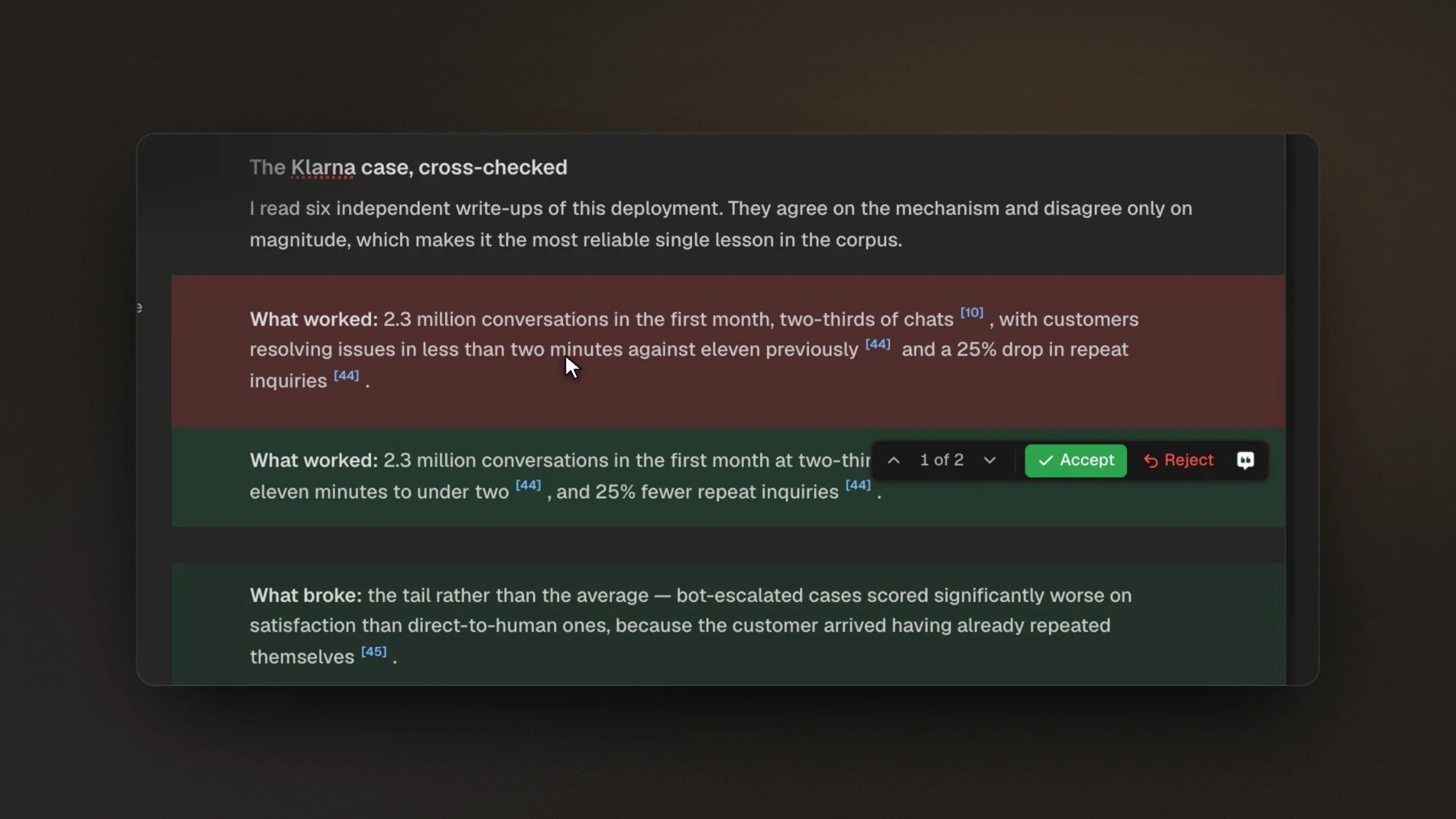
Marks every AI edit for your review
Ask a follow-up and Citaria updates the same document instead of writing a new reply. Each AI revision is marked as a tracked change you can accept or reject, so the report stays one version you control.
ChatGPT Deep Research reports can be downloaded as Markdown, Word, or PDF; OpenAI's documentation does not describe accepting or rejecting individual AI revisions.
Citaria vs ChatGPT Deep Research: feature comparison
| Feature | Citaria | ChatGPT Deep Research |
|---|---|---|
| Best for | Research you need to defend, claim by claim | Broad research across hundreds of web sources |
| Before research | Asks clarifying questions when a request is ambiguous | May ask clarifying questions and shows a research plan you can edit |
| Sources | Your project files and the open web | The web, uploaded files, and connected apps such as Google Drive or SharePoint |
| Quality check | A separate evaluator model audits every finished report | No separate review step described in OpenAI's documentation |
| Citation detail | Opens the exact passage, highlighted in the source | Citations and a sources section in every report |
| Cited sources over time | Cited web passages saved with the report | Source links; keeping copies is not described |
| Revisions | Every AI edit tracked for you to accept or reject | Download as Markdown, Word, or PDF |
| Price to start | Free tier | Limited use on the Free plan; more on paid plans |
Is Citaria better than ChatGPT Deep Research?
It depends on what the report is for. ChatGPT Deep Research is strong at broad research across hundreds of web sources. Citaria is the better fit when every claim must hold up, because Citaria audits each report with a separate evaluator model and links every claim to the exact source passage.
Why does a deep research report sometimes cite a source that does not support the claim?
Deep research tools summarize many sources at once, and a citation can point to a page that is related but does not say exactly what the sentence claims. Citaria checks for this with a separate evaluator model and opens each citation at the supporting passage, so a mismatch is visible in one click.
Does ChatGPT Deep Research ask clarifying questions like Citaria?
Yes. ChatGPT Deep Research may ask clarifying questions and shows a research plan you can edit before it starts. Citaria also asks when a request is ambiguous. The main differences are in how each report is checked and cited, not in how the research begins.
Can I use ChatGPT Deep Research and Citaria together?
Yes. ChatGPT Deep Research works well for a broad first pass over a topic. When the findings need to be presented or signed off, run the question in Citaria to get an audited report with passage-level citations and tracked revisions.
Is Citaria free?
Yes. Citaria has a free tier, so you can run real research and check every citation before choosing a paid plan.